
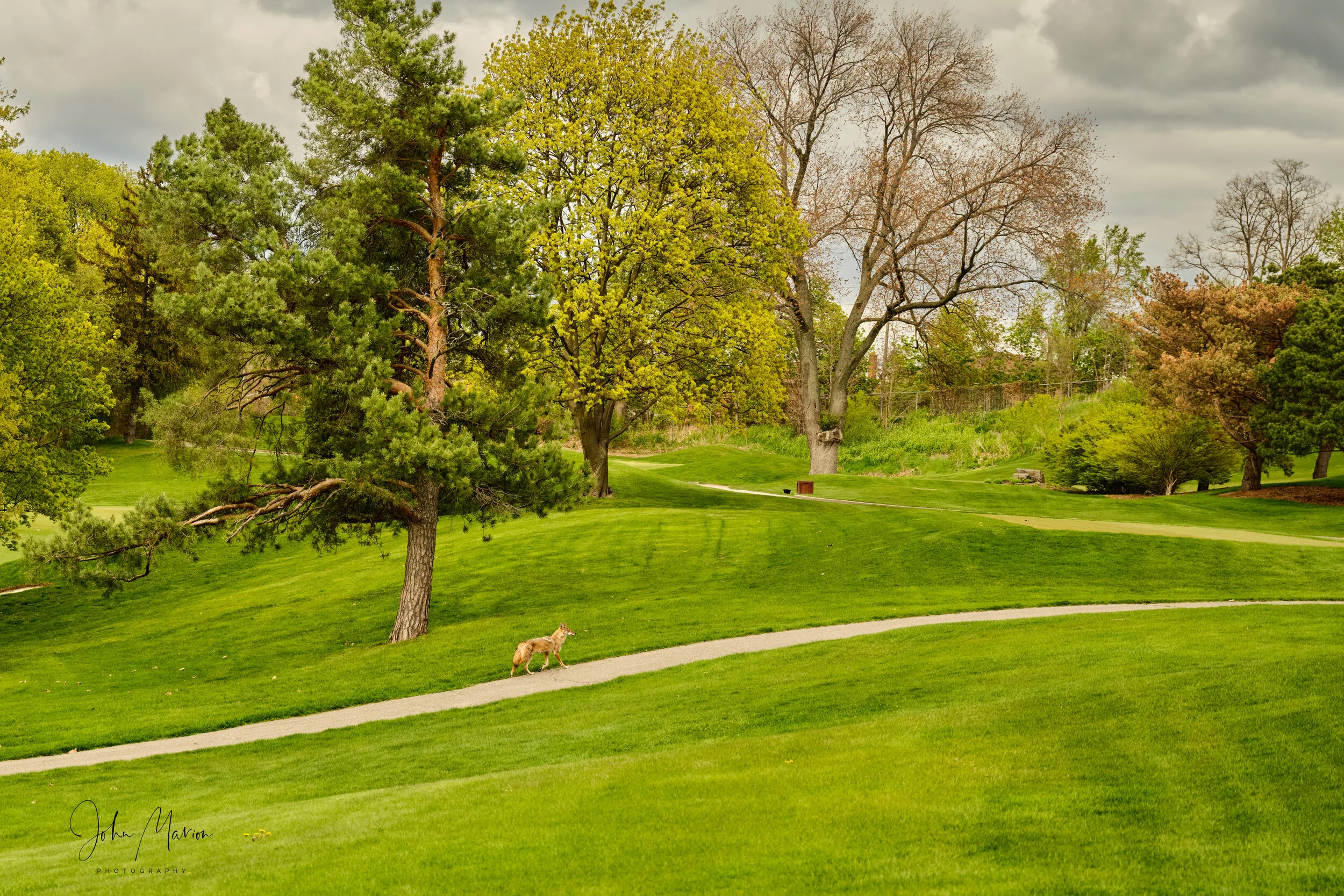
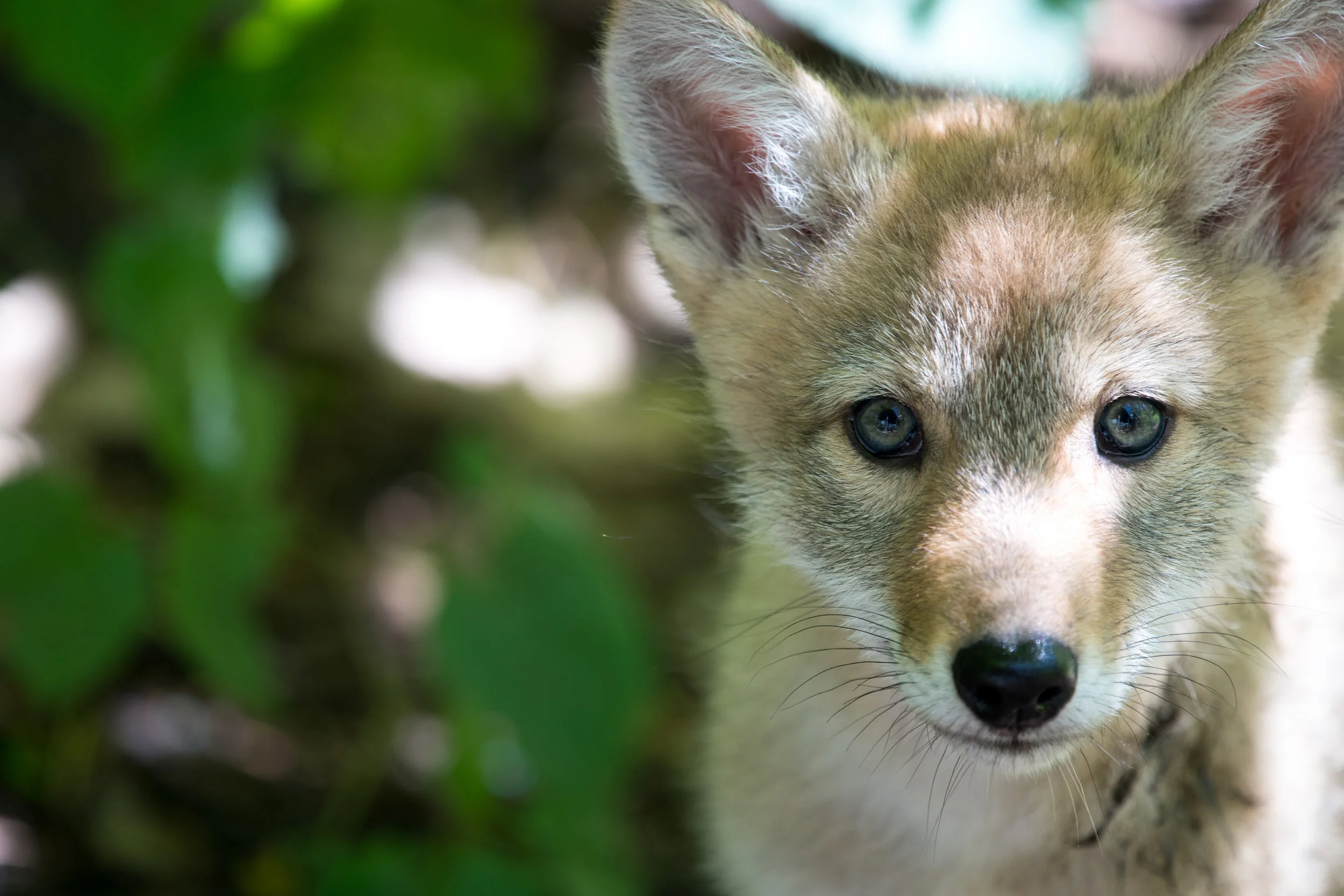
Eastern Coyote (Coy Wolf)
. Eastern Coyote (*Canis latrans*)
Larger than its western cousins due to historical hybridization with wolves, the Eastern Coyote is an exceptionally adaptable canine found throughout farm fields, forests, and urban ravines in Ontario. Possessing a grizzled grayish-brown coat and pointed ears, it is a opportunistic hunter eating rodents, rabbits, deer carrion, and fallen fruit. Operating individually, in pairs, or small family packs, its yipping howls are a frequent sound of rural Ontario nights.


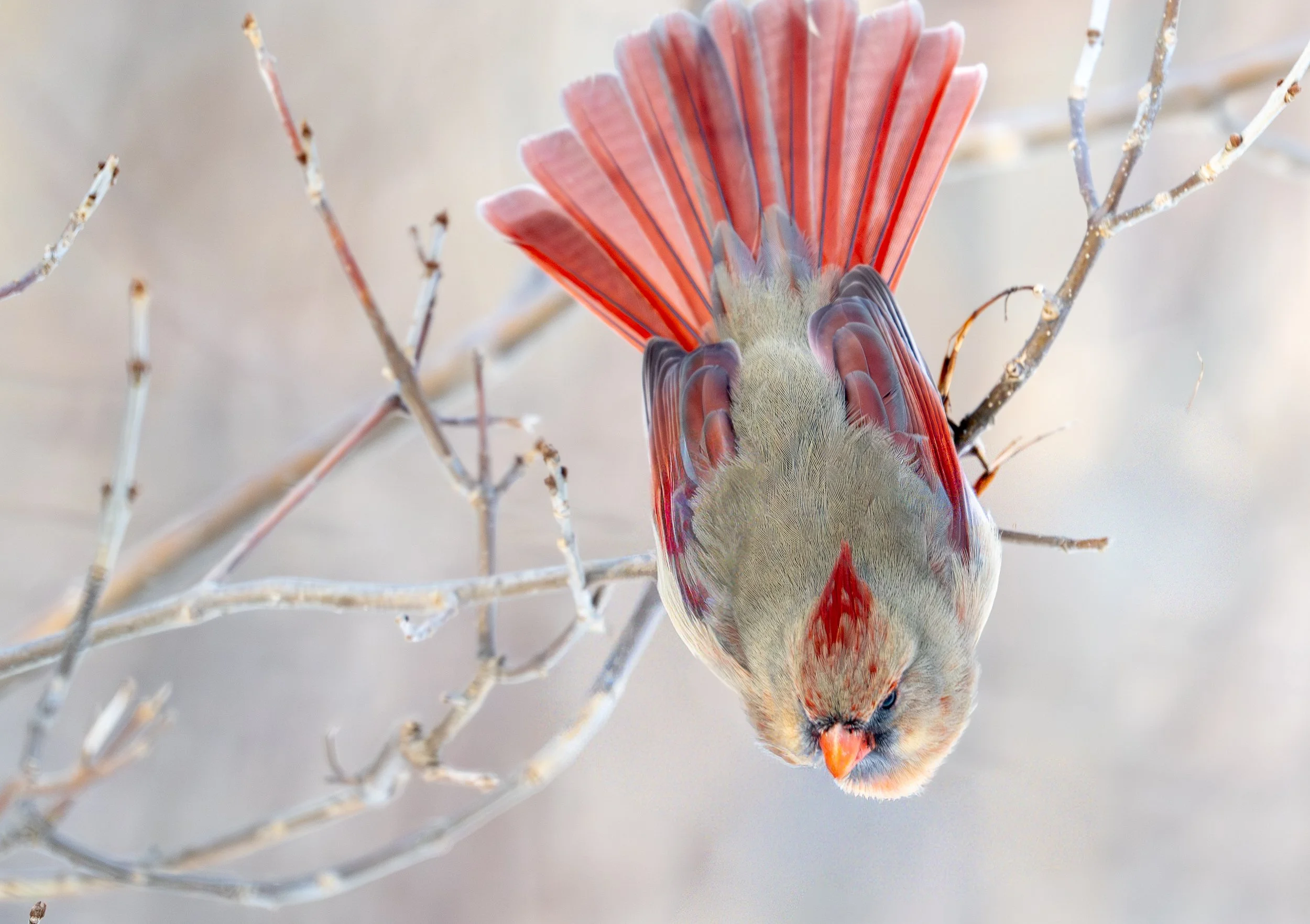
Northern Cardinal
. Northern Cardinal (*Cardinalis cardinalis*)
A beloved year-round resident of southern Ontario’s gardens, parks, and woodlots, the Northern Cardinal adds a striking pop of color to the landscape, especially against winter snow. Males boast brilliant crimson plumage, a bold crest, and a black face mask, while females are warm tan with reddish accents. Visiting bird feeders regularly for sunflower seeds, these birds mate for life and cheerily sing loud, clear whistle patterns throughout spring and summer.

Northern Cardinal
. Northern Cardinal (*Cardinalis cardinalis*)
A beloved year-round resident of southern Ontario’s gardens, parks, and woodlots, the Northern Cardinal adds a striking pop of color to the landscape, especially against winter snow. Males boast brilliant crimson plumage, a bold crest, and a black face mask, while females are warm tan with reddish accents. Visiting bird feeders regularly for sunflower seeds, these birds mate for life and cheerily sing loud, clear whistle patterns throughout spring and summer.
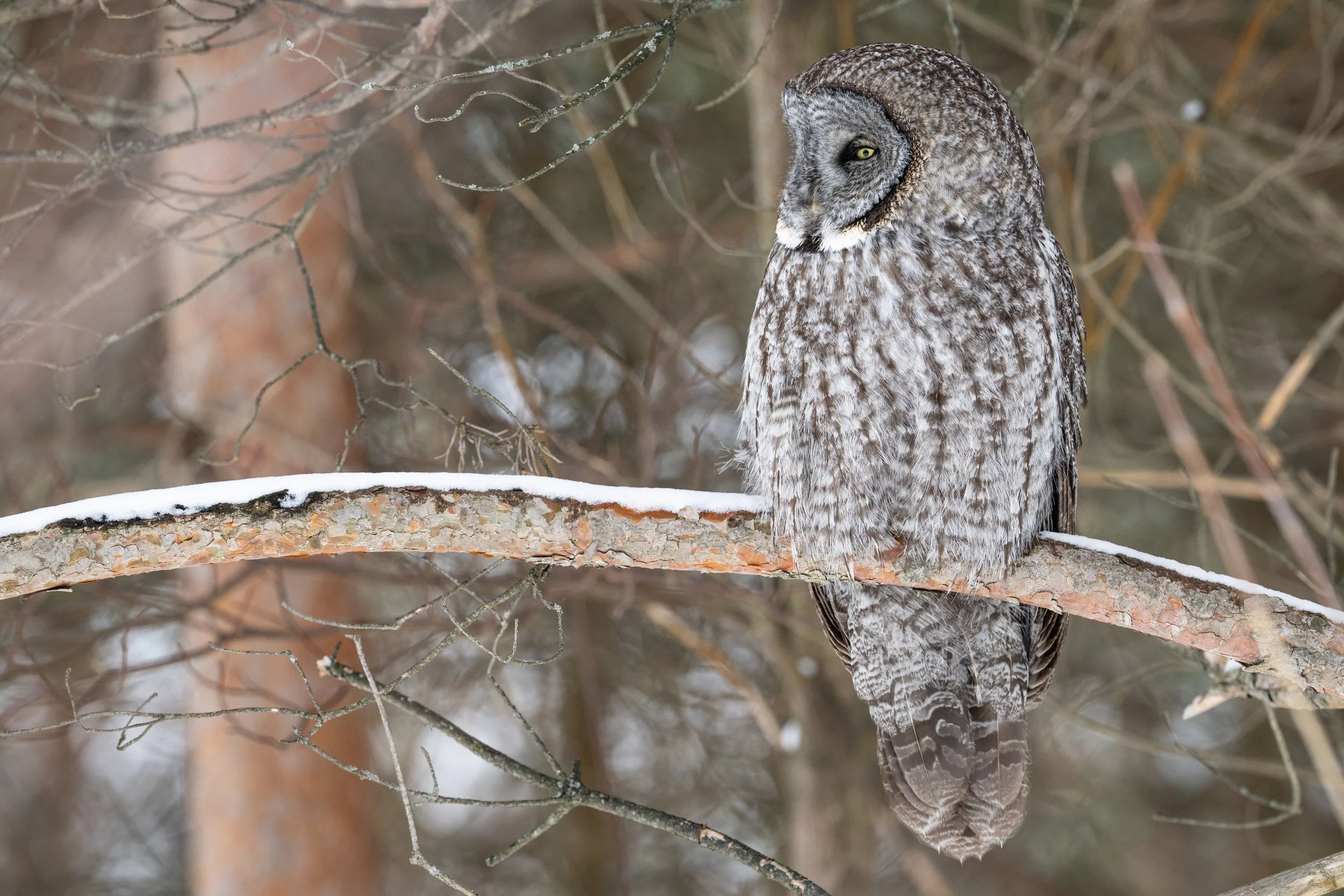
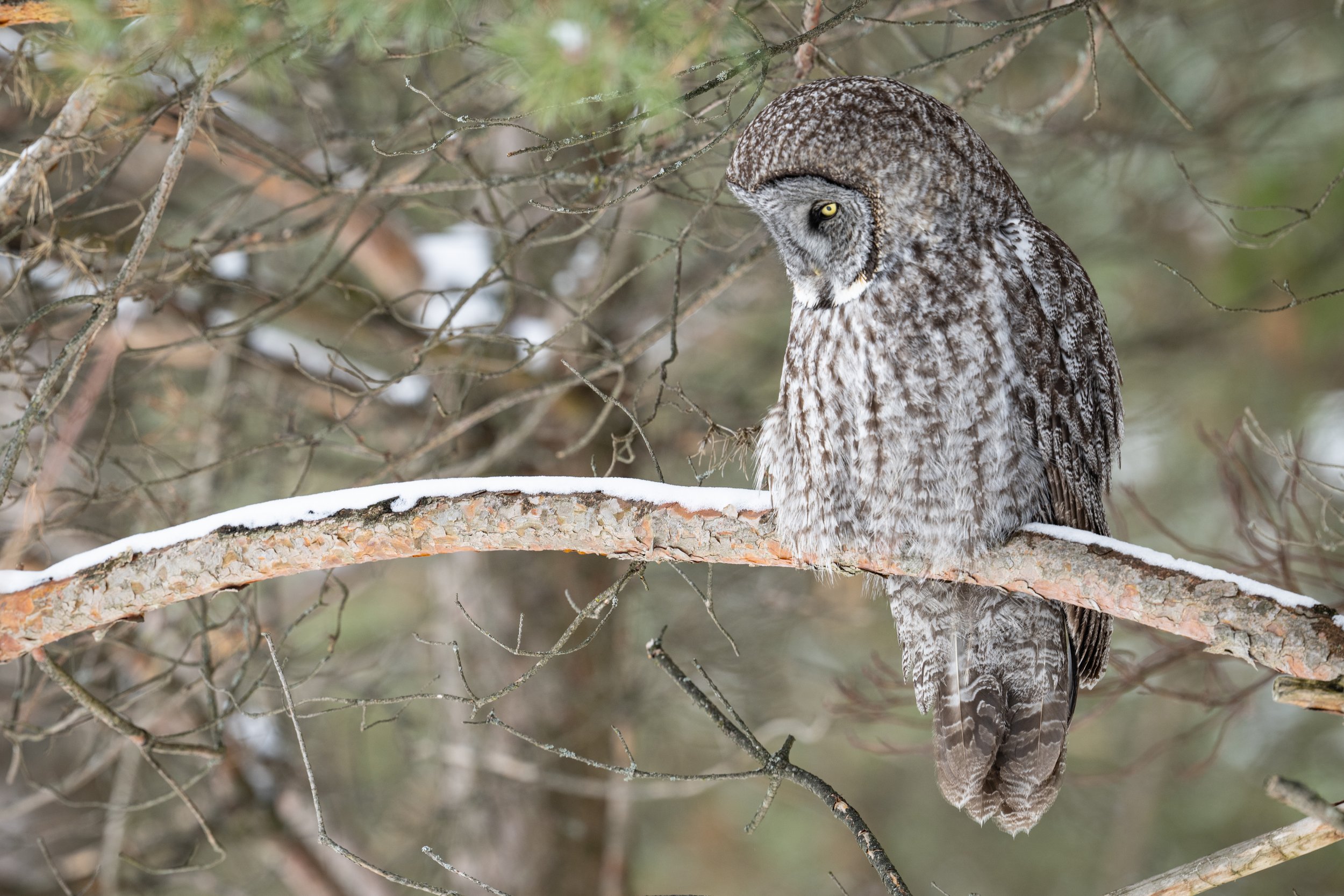
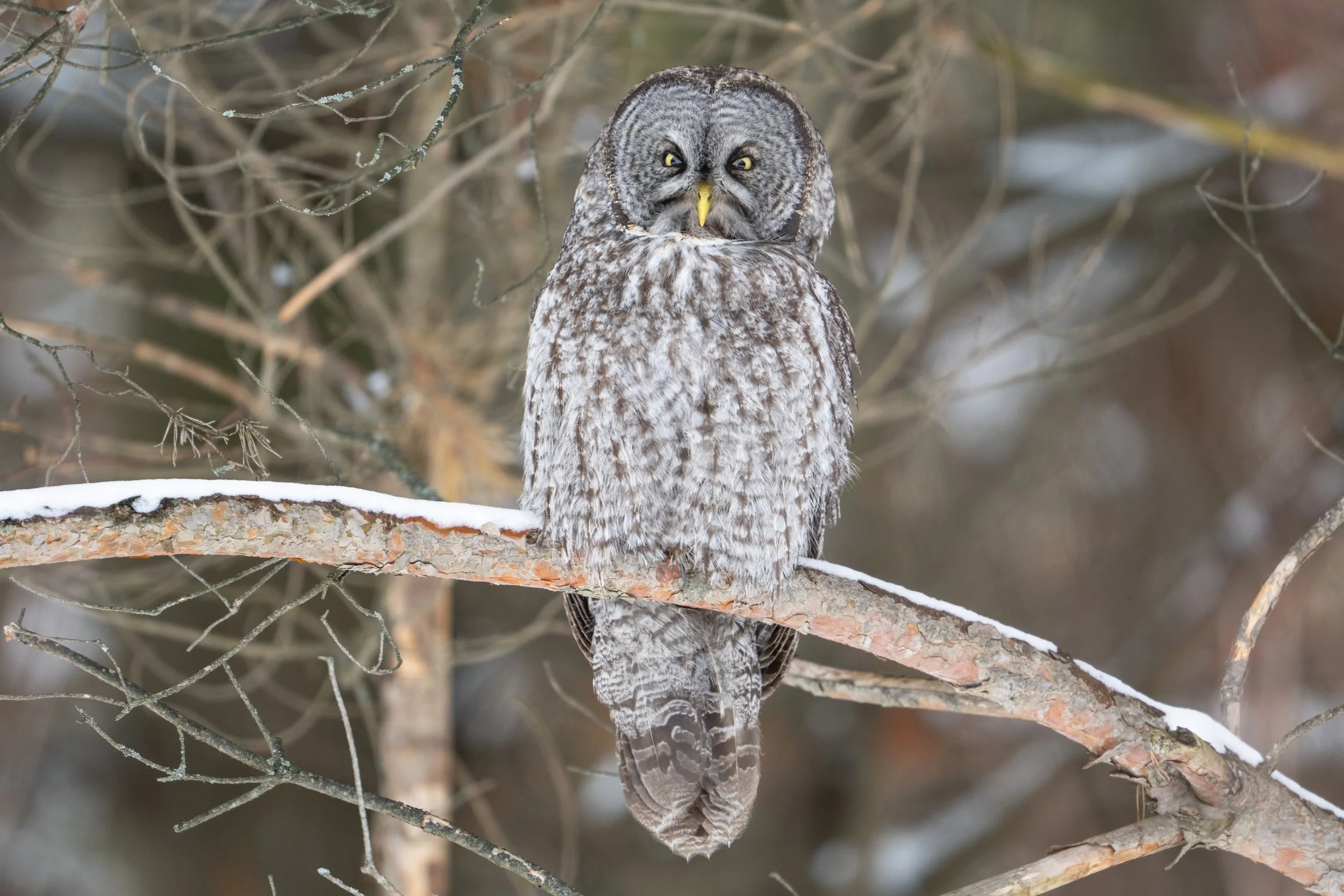
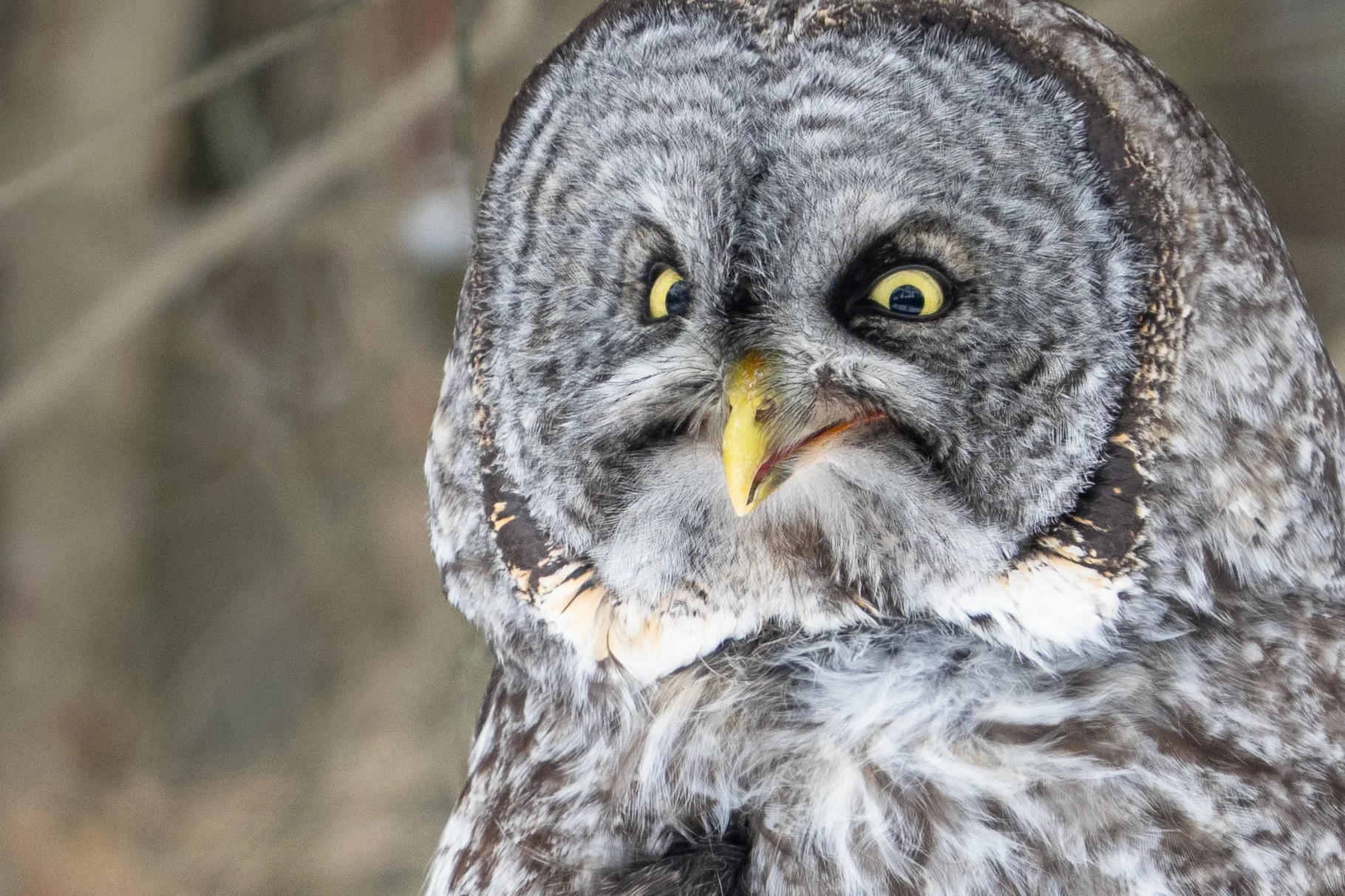
Great Gray Owl
Great Gray Owl (Strix nebulosa)
The Great Gray Owl is North America's tallest owl by length, though mostly fluff and feathers. It inhabits the dense boreal forests and bogs of northern and central Ontario. Characterized by a massive, ringed facial disc and bright yellow eyes, it possesses extraordinarily sharp hearing. This semi-diurnal hunter can detect voles moving under two feet of hardened snow, plunging feet-first to snatch hidden prey with precise mechanical accuracy.
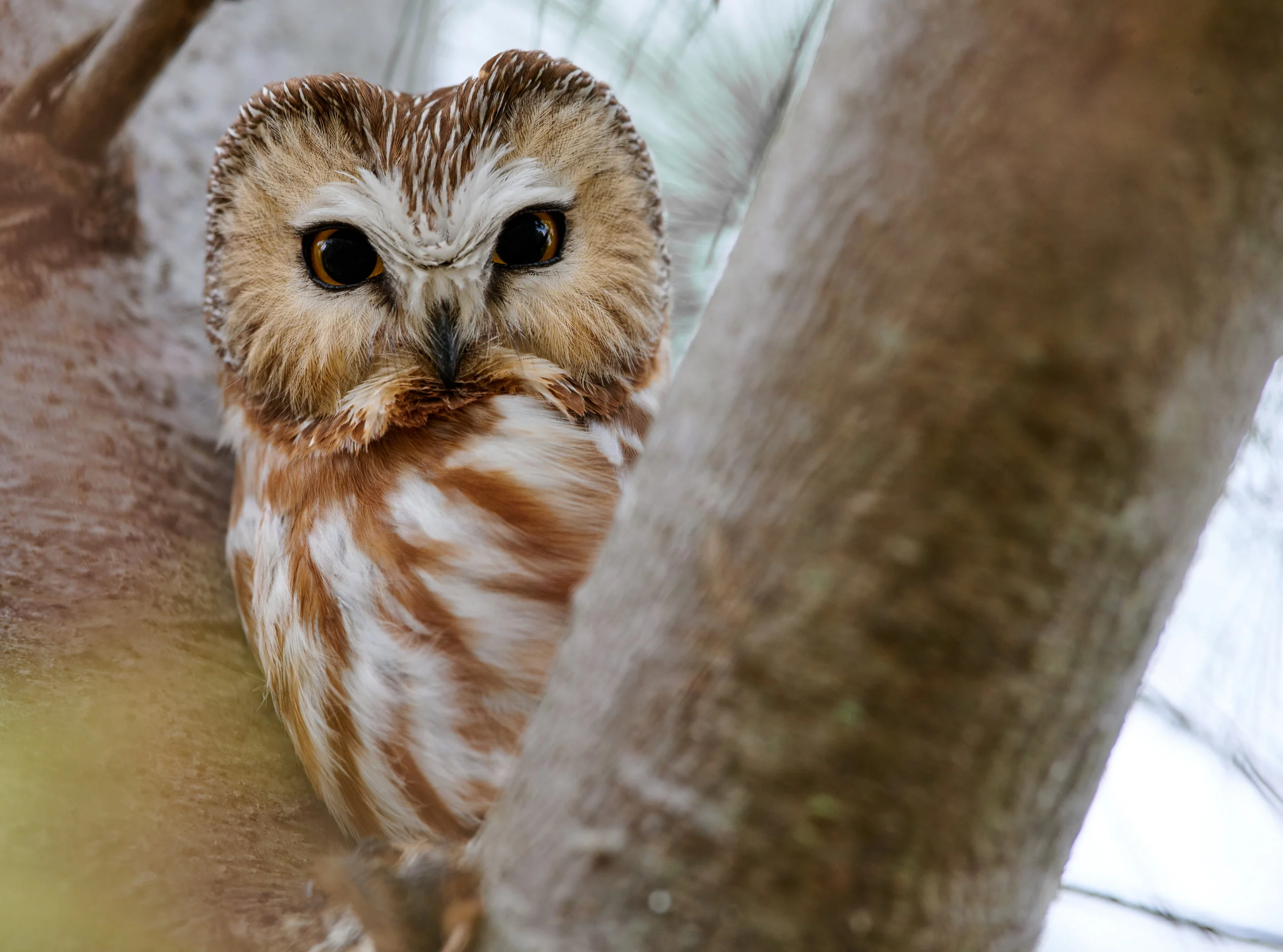

Northern Saw-whet Owl (Aegolius acadicus)
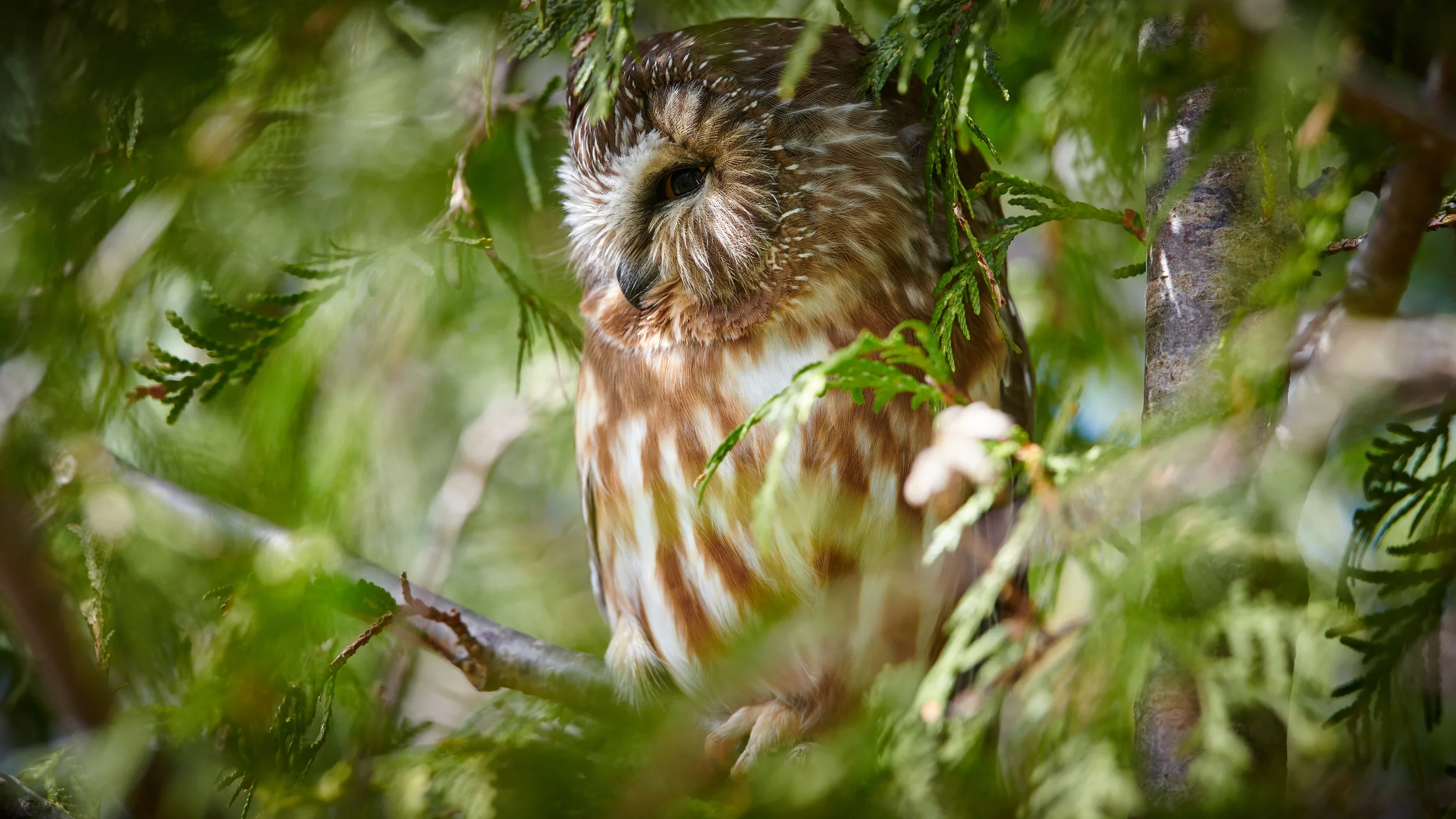
As Ontario's smallest native owl, the Northern Saw-whet is roughly the size of a cat robin. It possesses a oversized, round head, white facial streaks, and no ear tufts. Preferring dense coniferous or mixed forests, this secretive, strictly nocturnal owl migrates through southern Ontario every autumn. Its catatonic daytime roosting habit makes it elusive, relying on supreme camouflage rather than flight to avoid detection while feeding on mice.
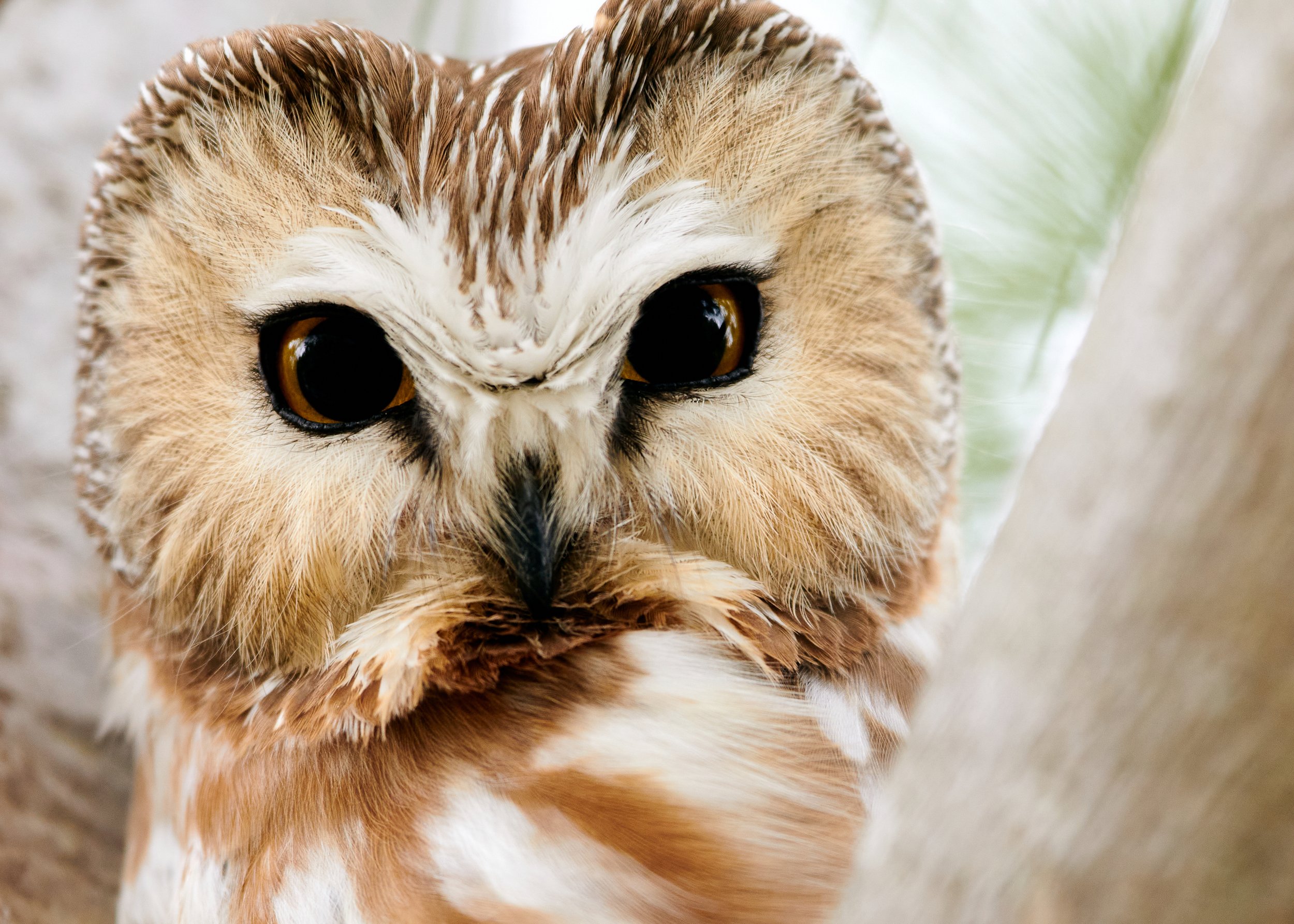
Northern Saw-Whet Owl
One of the smallest and cutest Toronto Raptors:)

Northern Harrier
Northern Harrier (Circus hudsonius)
Distinguished by an owl-like facial disc and a bright white patch on its rump, the Northern Harrier is an open-country specialist found in Ontario's wetlands and pastures. It relies heavily on sound alongside keen eyesight to track prey. Flying very low to the ground with its wings held in a V-shape, this slender, long-tailed hawk glides buoyant over grassy fields to drop suddenly onto mice, songbirds, or frogs.


Northern Harrier chasing a Red-tailed Hawk

Northern Harrier
Northern Harrier (Circus hudsonius)
Distinguished by an owl-like facial disc and a bright white patch on its rump, the Northern Harrier is an open-country specialist found in Ontario's wetlands and pastures. It relies heavily on sound alongside keen eyesight to track prey. Flying very low to the ground with its wings held in a V-shape, this slender, long-tailed hawk glides buoyant over grassy fields to drop suddenly onto mice, songbirds, or frogs.

Stunning Northern Harrier with it's Owl-like face
Northern Harrier (Circus hudsonius)
Distinguished by an owl-like facial disc and a bright white patch on its rump, the Northern Harrier is an open-country specialist found in Ontario's wetlands and pastures. It relies heavily on sound alongside keen eyesight to track prey. Flying very low to the ground with its wings held in a V-shape, this slender, long-tailed hawk glides buoyant over grassy fields to drop suddenly onto mice, songbirds, or frogs.
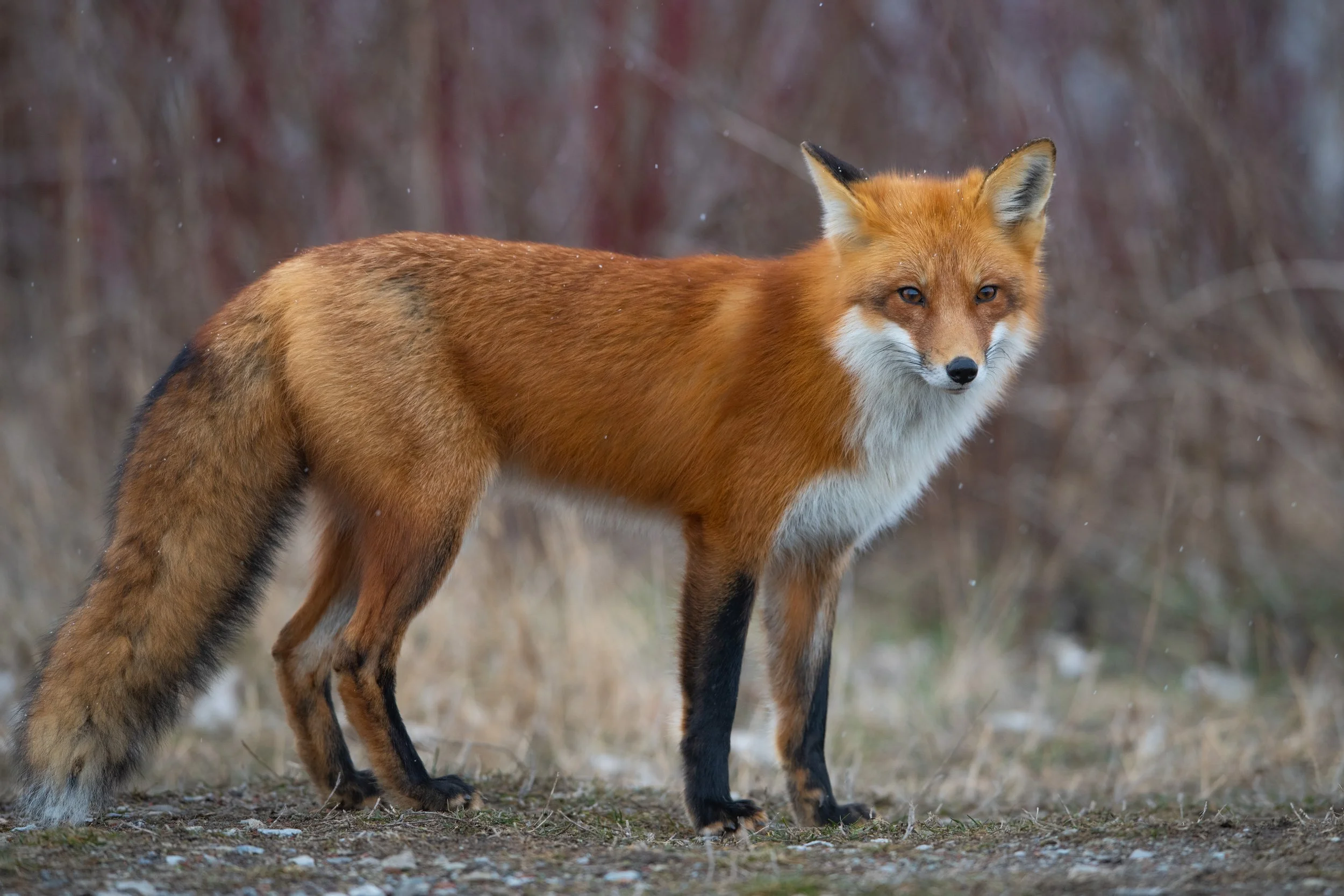
Red Fox
. Red Fox (*Vulpes vulpes*)
The Red Fox is Ontario's most common fox species, recognized by its reddish-orange fur, black legs, pointed snout, and white-tipped bushy tail. Thriving in mixed farmland, suburban neighborhoods, and forest edges across the province, it is an opportunistic omnivore. Relying on its incredible hearing, it can detect small rodents moving beneath thick snow, leaping high into the air to pounce on its target.

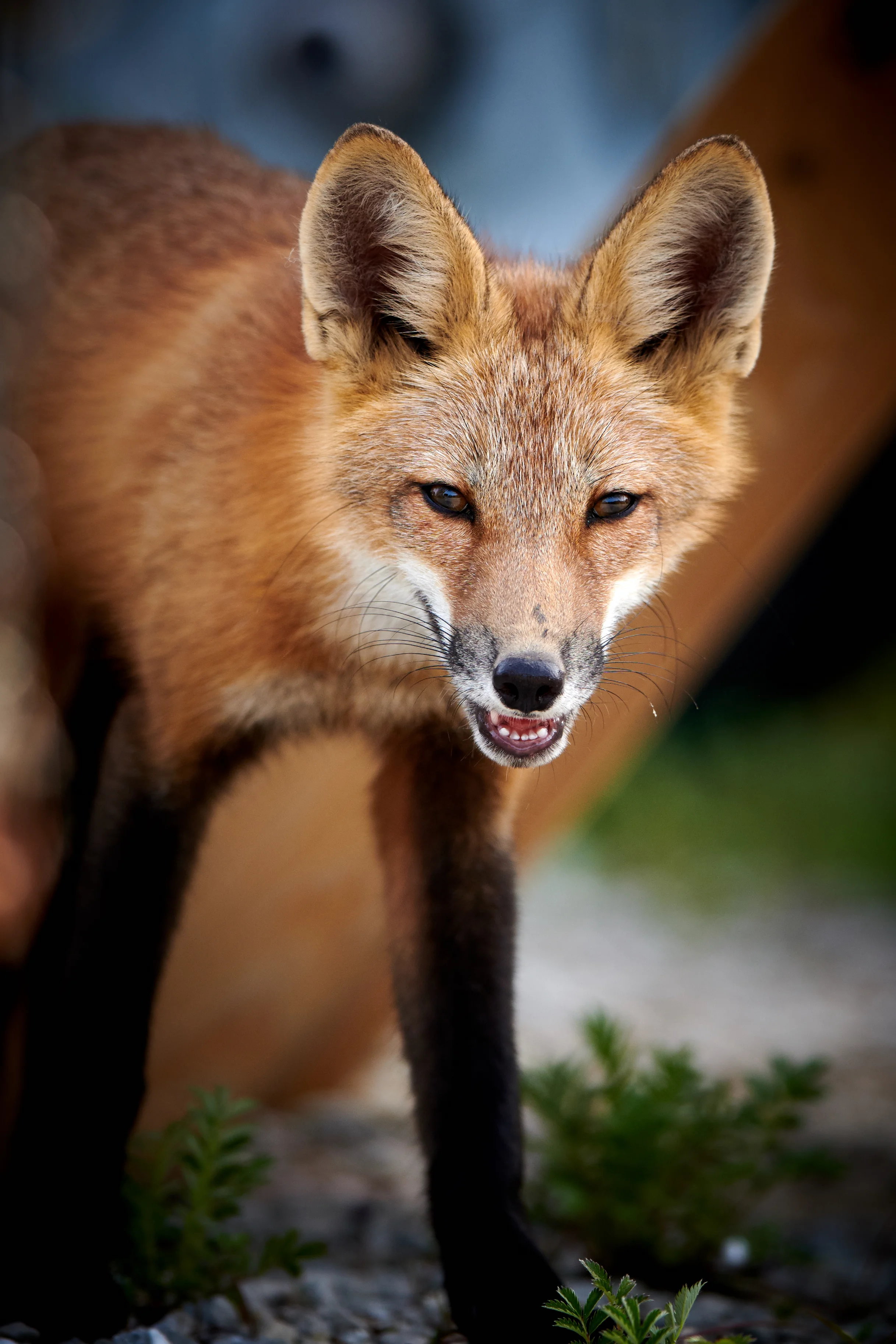
Stunning Red Fox
What a beauty! On the hunt at Lighthouse Point in Tommy Thompson Park


Great Horned Owl
. Great Horned Owl (Bubo virginianus)
The Great Horned Owl is Ontario’s quintessential nocturnal predator, recognizable by its prominent ear tufts and striking yellow eyes. Adaptable to dense northern forests, farmland, and suburban parks across the province, this thick-bodied raptor hunts everything from rodents to waterfowl and skunks. Highly aggressive toward potential intruders, it relies on its silent flight to ambush prey at dusk. Its deep, resonant "who-who-who-who" call is a staple sound of Ontario nights.

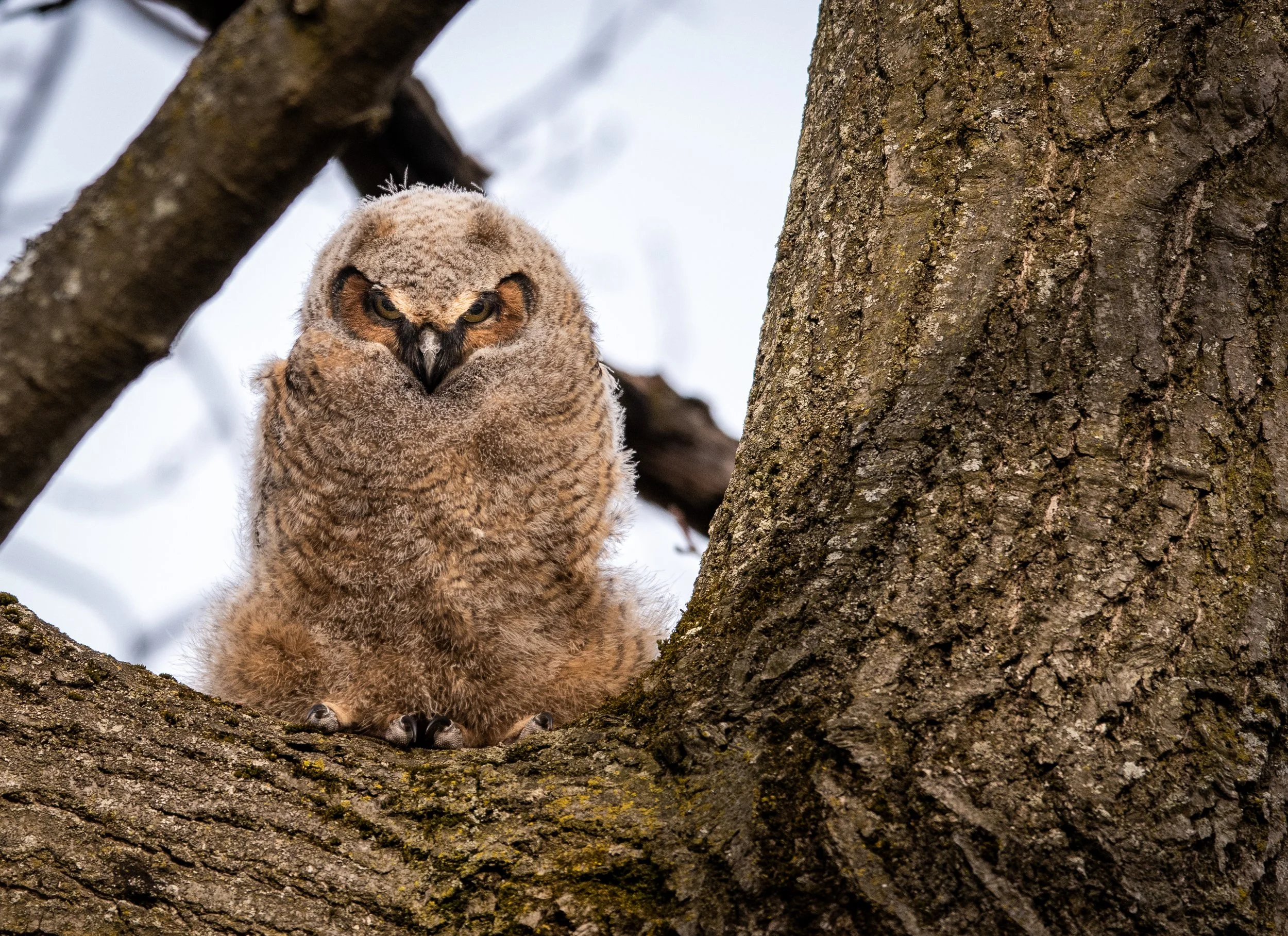
Jevenile Great Horned Owl
Patiently waiting for a mid day meal delivery

White-tailed Deer
White-tailed Deer (*Odocoileus virginianus*)
A familiar sight across southern and central Ontario, the white-tailed deer is named for the distinctive white underside of its tail, flashed as an alarm signal when fleeing. Preferring edge habitats, farmlands, and suburban parks, this adaptable herbivore grazes on grasses, leaves, acorns, and agricultural crops. Highly alert with keen senses of scent and hearing, white-tailed deer form small family groups, serving as a vital prey species for coyotes and wolves.


Awesome White-Tailed 8 point Buck
Very much at home in Toronto. Lucky for them and us, Toronto has a great canopy, ranking # 5 in the world.

White-tailed Deer
White-tailed Deer (*Odocoileus virginianus*)
A familiar sight across southern and central Ontario, the white-tailed deer is named for the distinctive white underside of its tail, flashed as an alarm signal when fleeing. Preferring edge habitats, farmlands, and suburban parks, this adaptable herbivore grazes on grasses, leaves, acorns, and agricultural crops. Highly alert with keen senses of scent and hearing, white-tailed deer form small family groups, serving as a vital prey species for coyotes and wolves.


Green -Winged Teal
Small size, big attitude:)

Mandarin Duck
Just a quick heads-up: while they do occasionally turn up in Ontario parks (like Toronto's High Park or local ponds), they are non-native birds native to East Asia. Any spotted in Ontario are exotic escapees or introduced vagrants rather than established wild populations! Mandarin Duck (*Aix galericulata.
Native to East Asia, the Mandarin Duck is a small dabbling duck legendary for its spectacular breeding plumage. The male displays a red bill, large white eye crescents, a dramatic copper head crest, and two orange "sail" feathers sticking up from its back. Closely related to North America’s Wood Duck, it nests in tree cavities near shallow woodland ponds and streams. In Ontario, rare individuals spotted in urban parks are typically escapees from private collections.

Belted Kingfisher
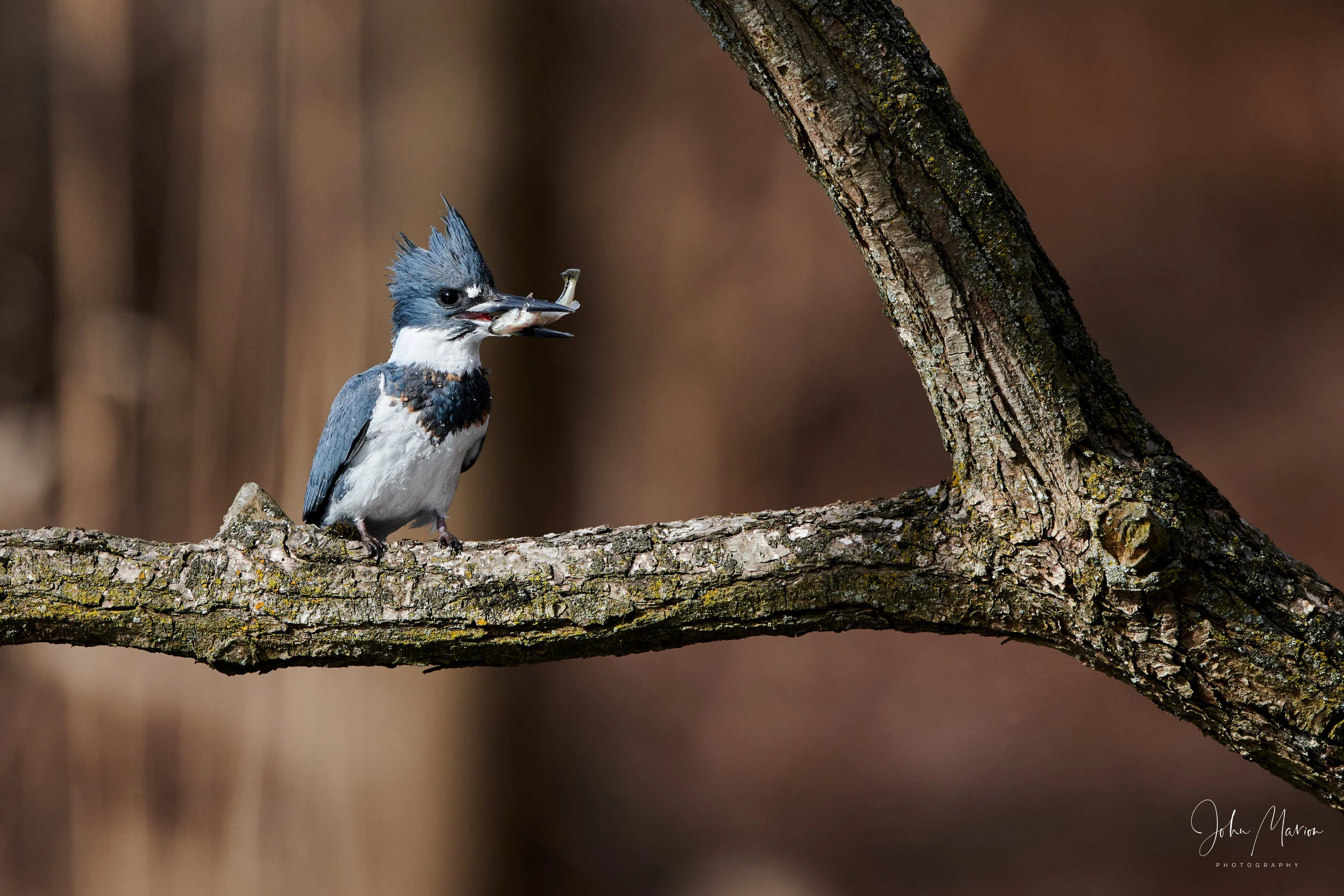
. Belted Kingfisher (*Megaceryle alcyon*)
The Belted Kingfisher is a top-heavy aquatic bird found along Ontario's rivers, lakes, and shorelines. Instantly recognizable by its shaggy crest, stocky build, and long, dagger-like beak, it is one of the rare bird species where the female is more colorful than the male, possessing a chestnut belly band alongside her blue-gray feathers. Often heard making a loud rattling call before it is seen, this bird hovers over water before diving headfirst to spear small fish and crayfish.

Northern Hawk Owl
. Northern Hawk Owl (Surnia ulula)
Resembling a hawk in both build and behavior, the Northern Hawk Owl lives in Ontario's northern boreal spruce forests and muskegs. It features a long, tapered tail, pointed wings, and a sharply patterned facial disc. Completely diurnal, this fearless predator sits atop solitary dead trees in broad daylight, watching for movement in the vegetation. It delivers fast, horizontal attacks, preying on small mammals and northern songbirds.
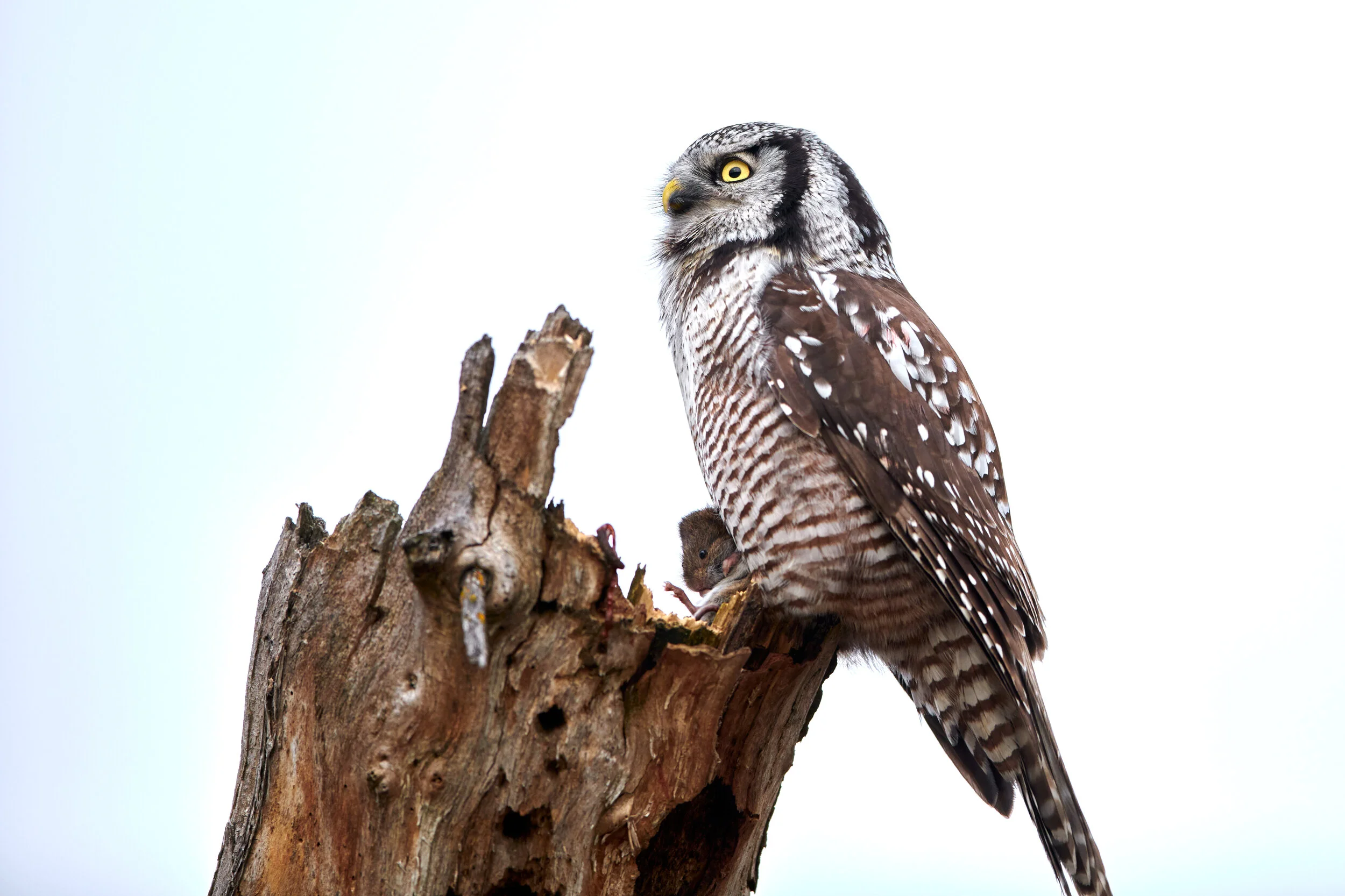
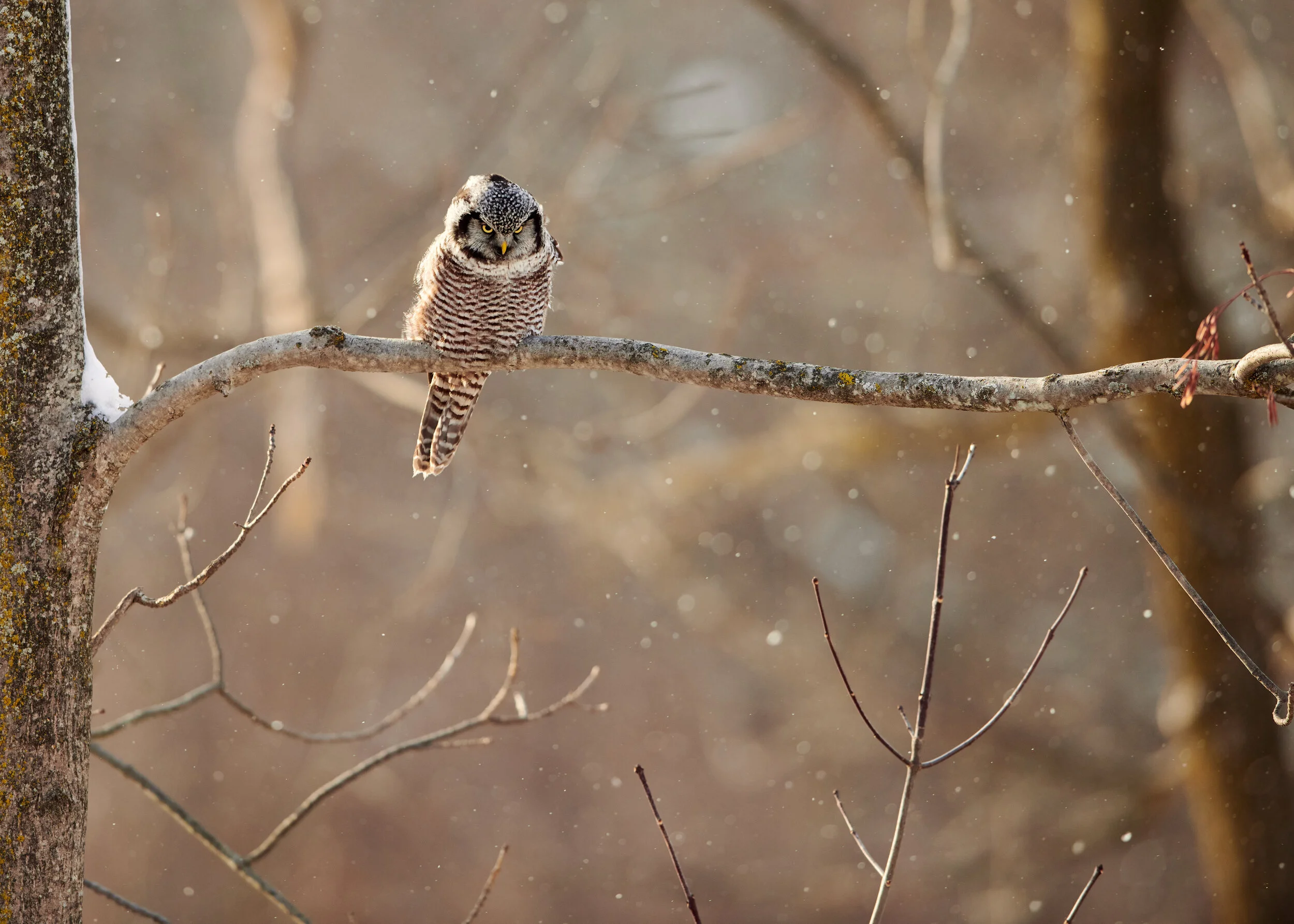

Rare find, just north of the city….This amazing Northern hawk owl was putting on a show:)

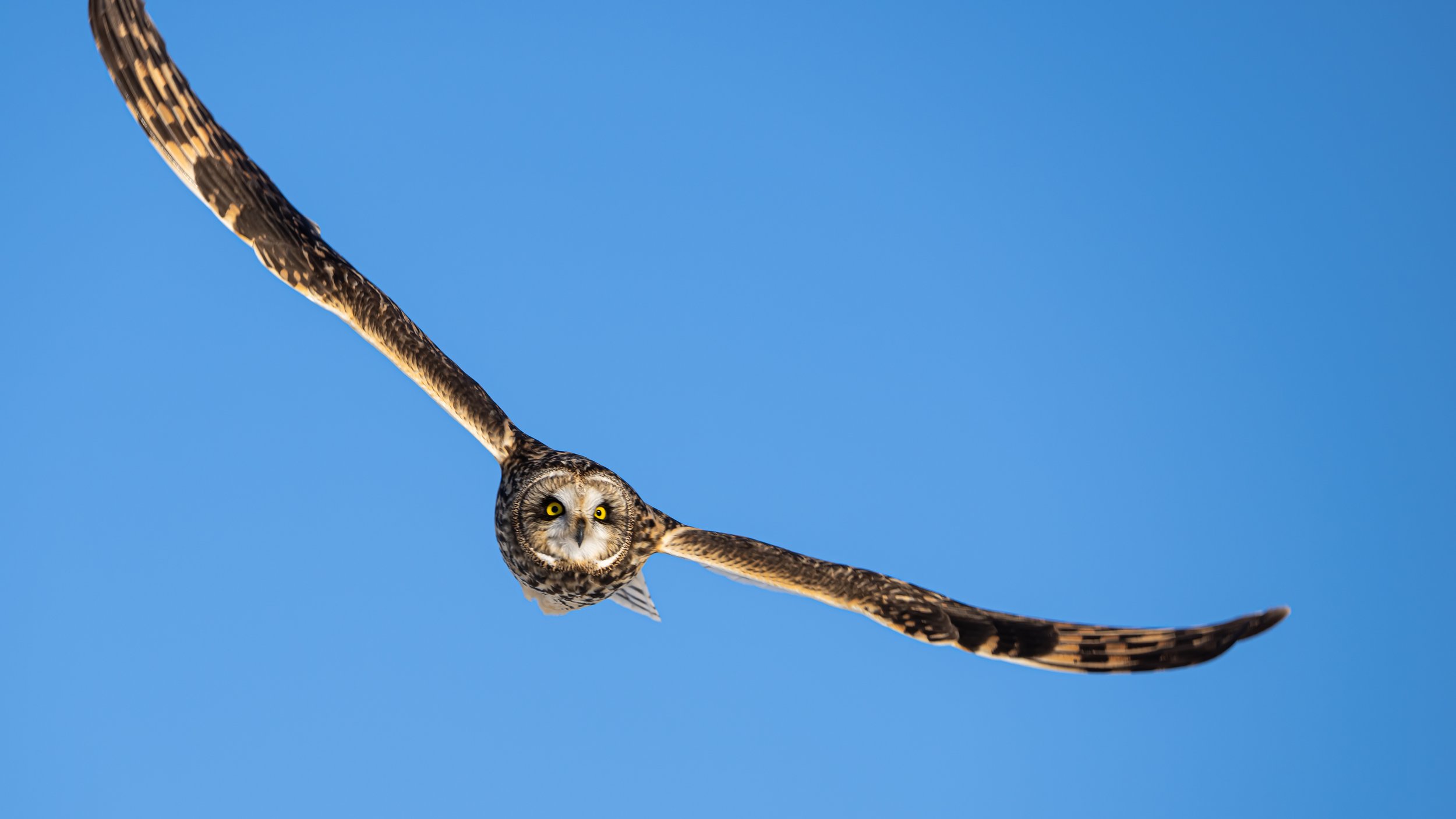
Short-eared Owl
Short-eared Owl (Asio flammeus)
Unlike its forest-dwelling cousins, the Short-eared Owl roosts and nests directly on the ground in marshes, grasslands, and agricultural fields across Ontario. Recognized by its subtle ear tufts, dark eye patches, and moth-like wing beats, this owl is crepuscular, actively hunting at dawn and dusk. Birdwatchers often spot them flying low over grassy fields, dipping and buoyant like a giant butterfly, as they search for voles.


Incredible Raptor, the Short Eared Owl!
These beautiful specimens of nature unfazed by the wildlife enthusiasts adoring and admiringly snapping away. Photographers have come from as far away as Florida to witness this amazing show. Typically wildlife in urban settings tend to be far less skittish than in the wild.




Salmon jumping at Etienne Brule Park

Green Heron
Sharp tongue!

Elegant Northern Pintail Duck (left)?
Ever wonder where he fashion world get their ideas and inspirationNorthern Pintail (*Anas acuta*)
Elegance defines the Northern Pintail, a slender dabbling duck with a long neck and a signature pointed, pin-like tail on the male. Sporting a chocolate-brown head, a clean white stripe extending down its neck, and gray flanks, it frequents Ontario’s marshes, prairie-like fields, and shallow lakes during spring and fall migrations. It dabbles for seeds and aquatic vegetation in shallow water, often standing out for its graceful, long-bodied silhouette in flight. from?

Juvenile Bald Eagle
Eyeing some wary ducks at LaSalle Park


Common Tern over Humber Bay park
Common Tern (*Sterna hirundo*)
A graceful aerial acrobat of Ontario’s Great Lakes and larger inland waters, the Common Tern is identified by its silvery-gray wings, jet-black cap, orange-red bill with a dark tip, and deeply forked tail. It nests in noisy, protective colonies on rocky islands and gravel shores. These birds fly above water with head tilted downward, suddenly plunging headfirst beneath the surface to capture small fish like emerald shiners.

Red-tailed Hawk
. Red-tailed Hawk (Buteo jamaicensis)
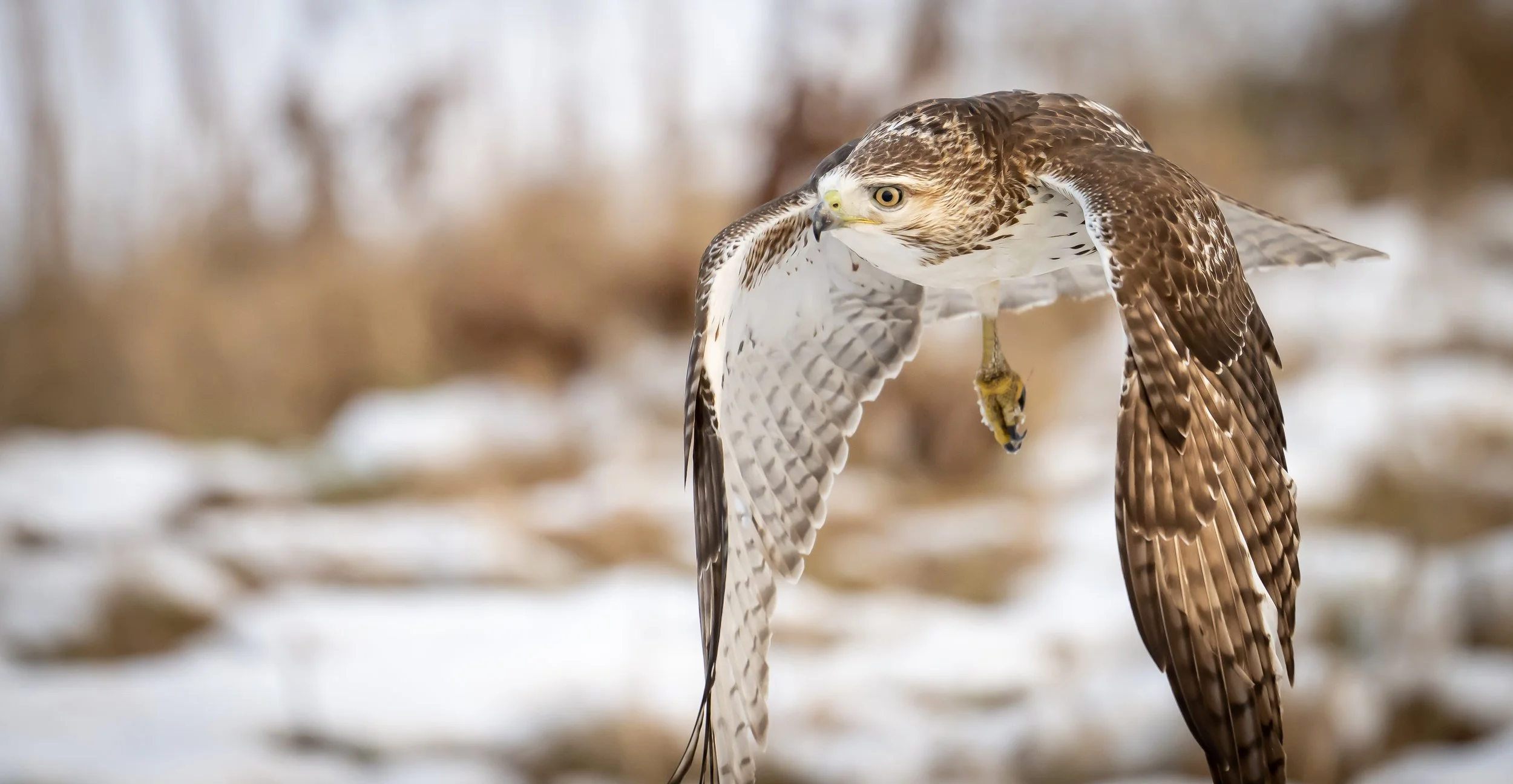
The Red-tailed Hawk is Ontario's most widespread and visible raptor. Recognized by its broad wings, rich rufous tail, and a dark "belly band" against a pale chest, it dominates open country, farmlands, and highway corridors. It spends hours perched on utility poles or riding thermals to scan the ground for rodents. When defending territory or hunting, it emits a classic, raspy, screaming call frequently used in film audio.
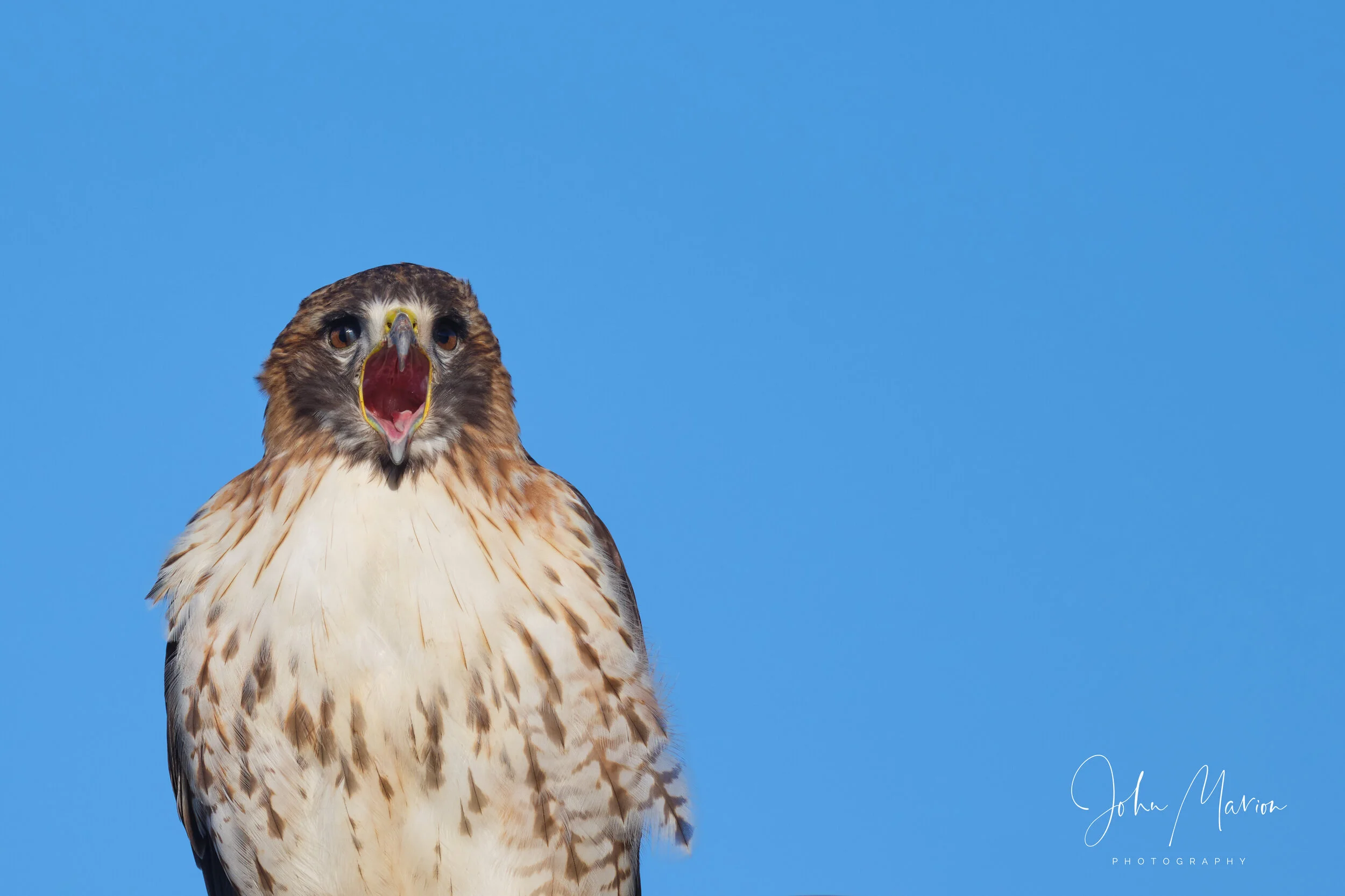

Red-Tailed Hawk


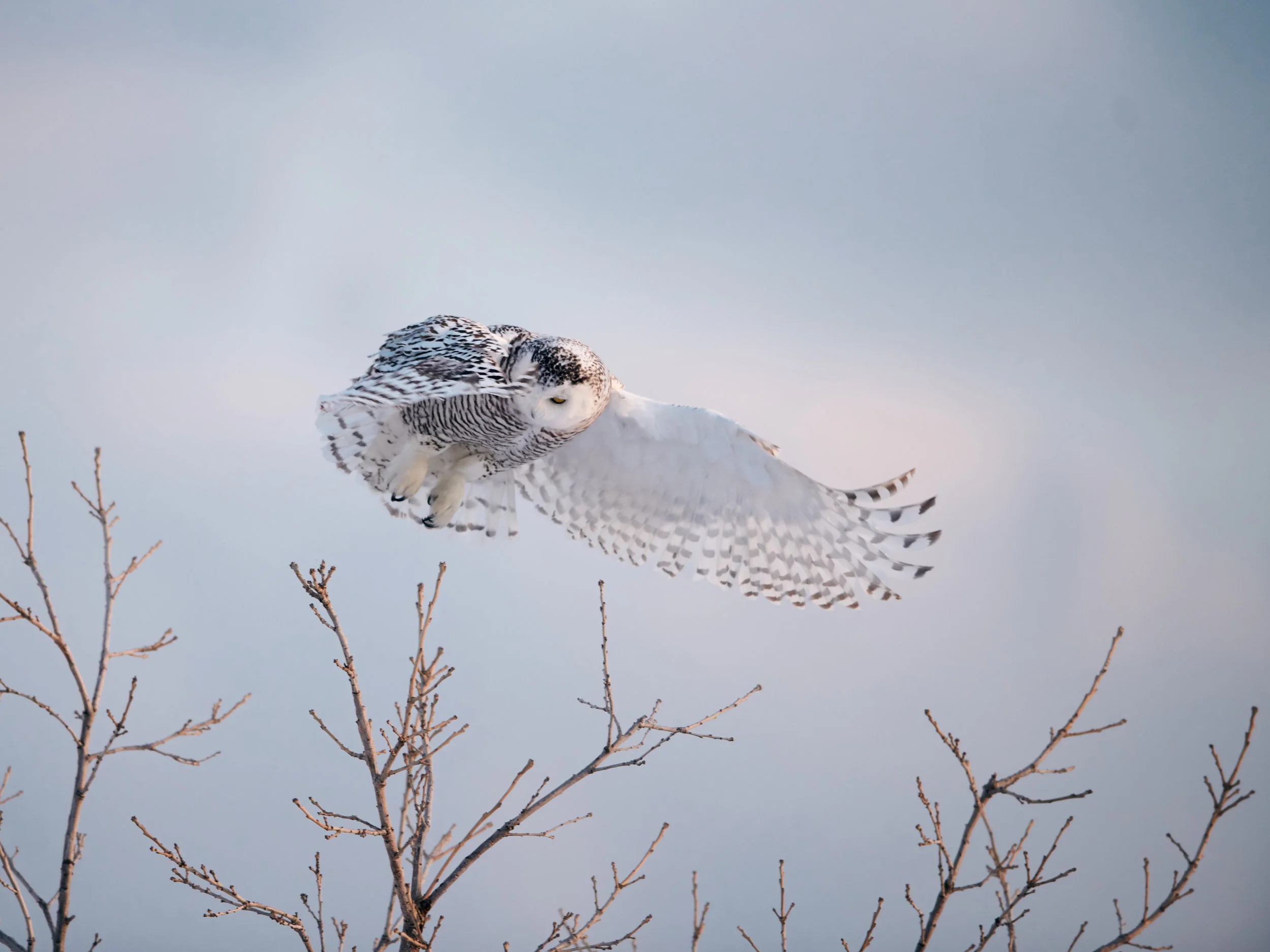
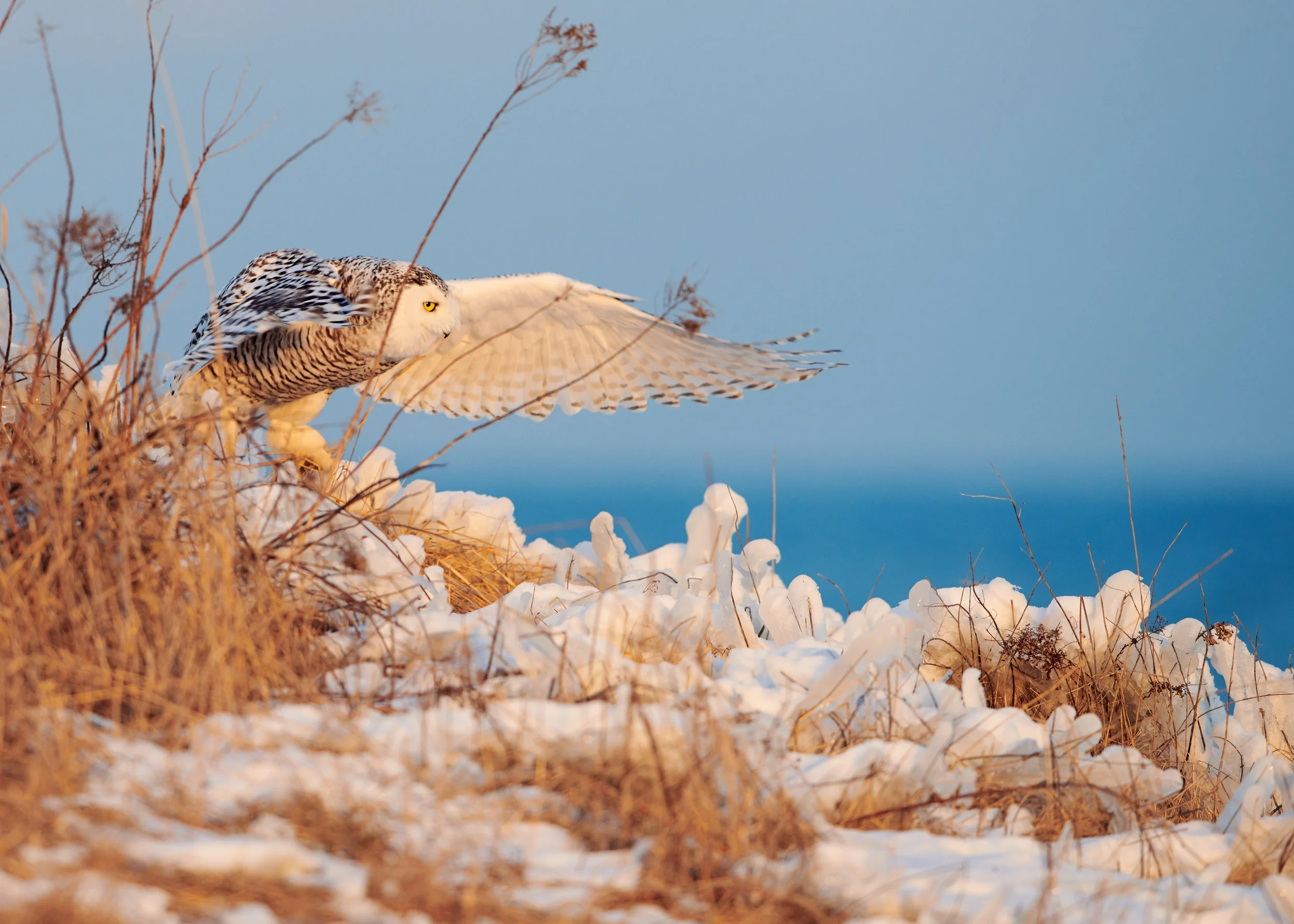
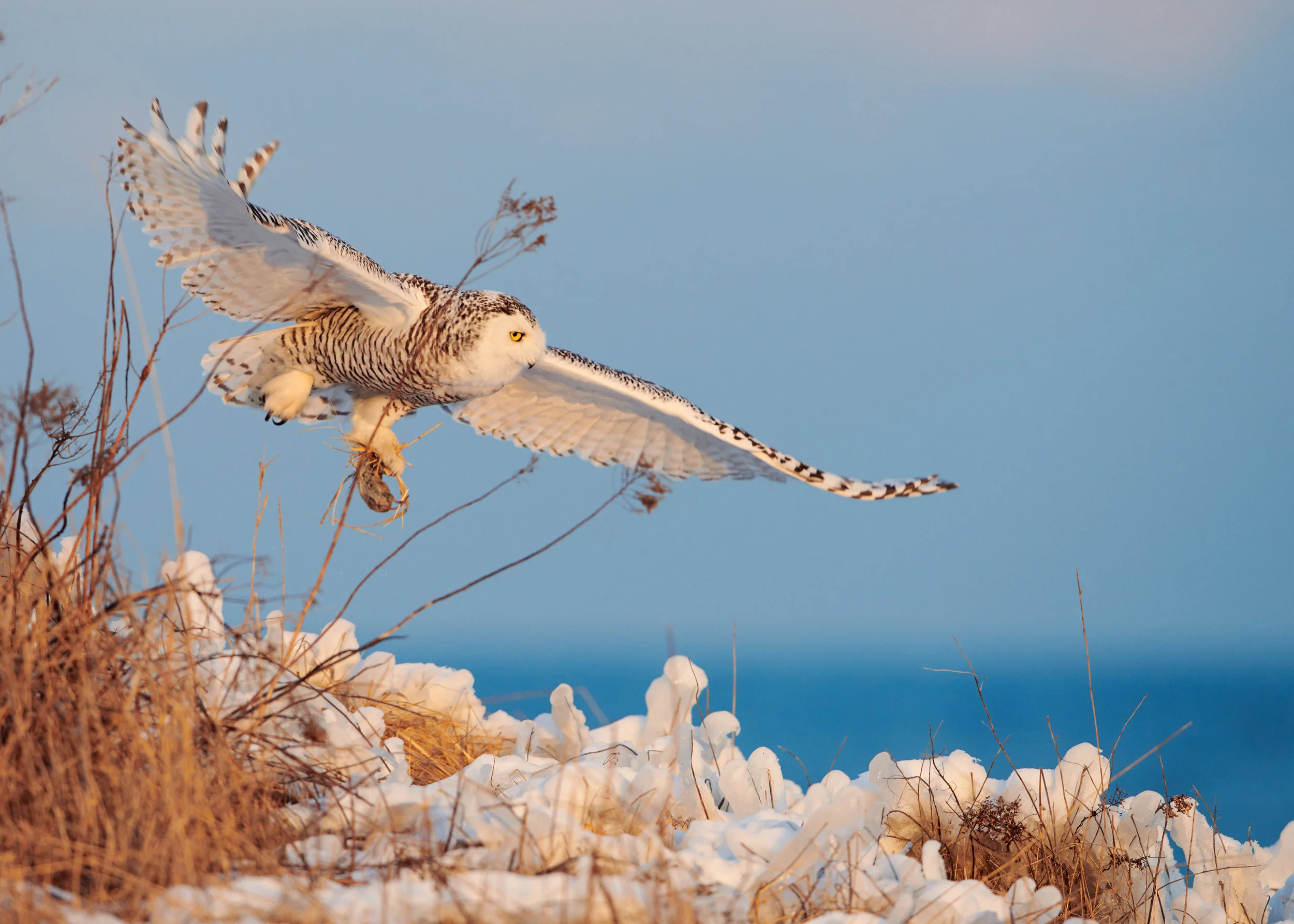
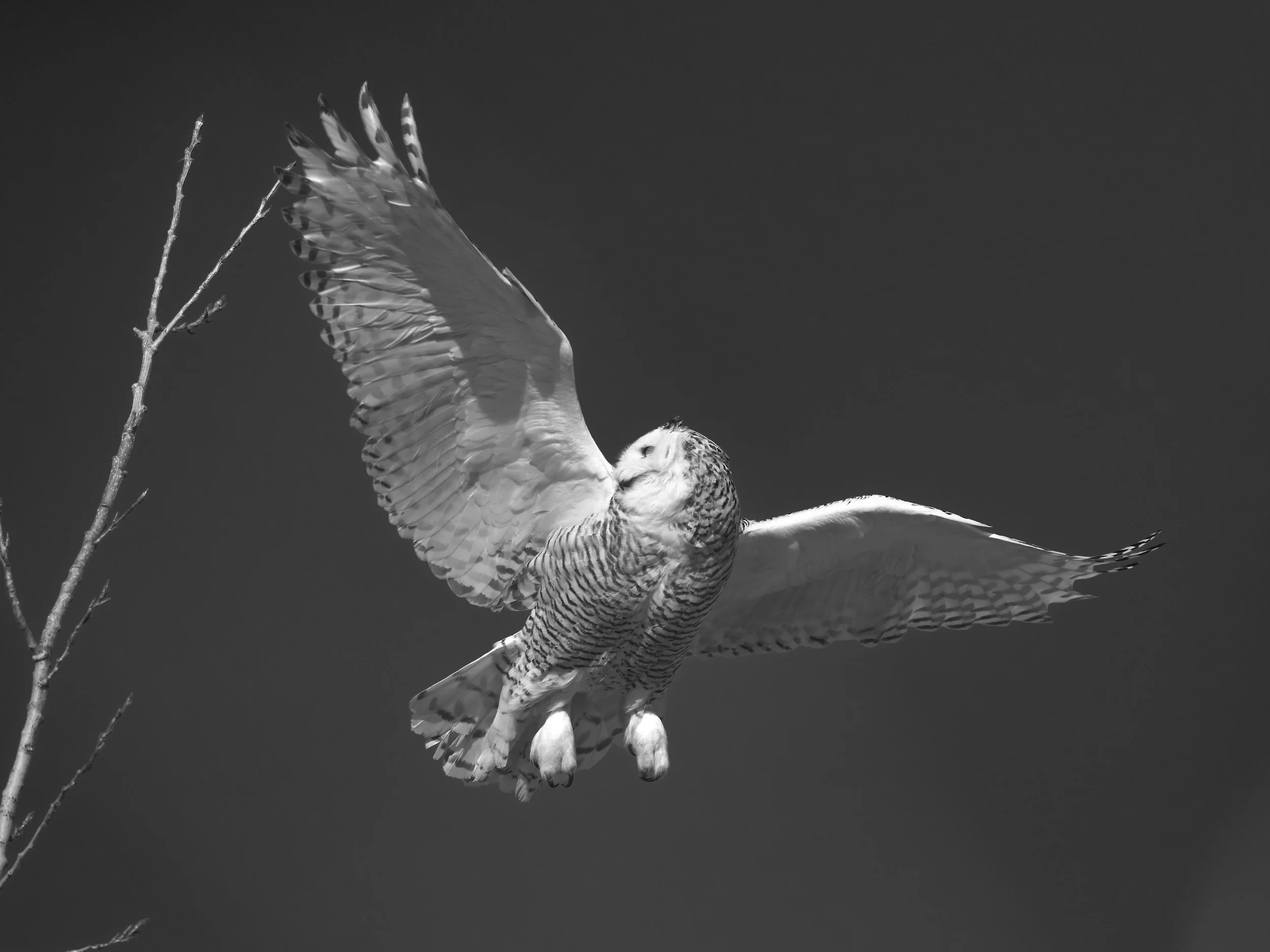
Graceful Snowy Owl
Snowy Owl (Bubo scandiacus)
Breeding in the Arctic tundra, the Arctic-native Snowy Owl migrates south into southern Ontario’s open farmland and shorelines during winter. Boasting bright white plumage with varying dark spots, this large, heavy owl thrives in wide-open expanses that mimic its northern breeding grounds. Unlike most owls, it is daytime-active (diurnal), perching on fence posts, knolls, or roofs to hunt ducks, rabbits, and small field rodents.

Eastern Screach Owl
Eastern Screech-Owl (Megascops asio)
The Eastern Screech-Owl is a tiny, robin-sized raptor inhabiting southern Ontario's deciduous forests, suburban backyards, and orchards. Occurring in both gray and reddish-brown (rufous) color phases, it uses tree cavities or nest boxes to roost and raise young. Despite its name, its voice sounds more like a gentle, whinnying horse or a trilling whistle. It eats small rodents, large insects, and small songbirds, striking silently from shaded branches.

Juvenile Eastern Screech Owl
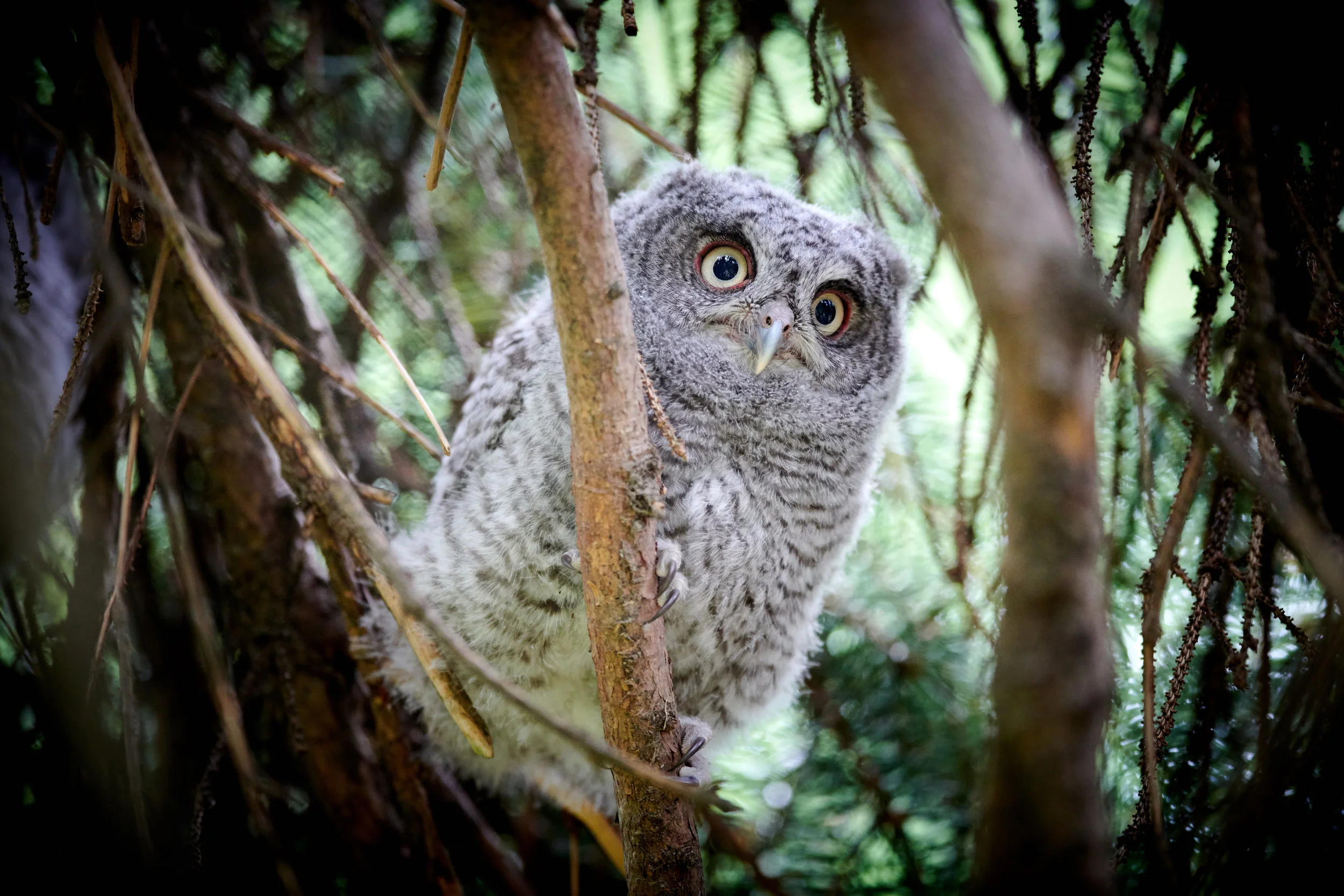
Curious baby screech owl at Rosetta McCain Gardens
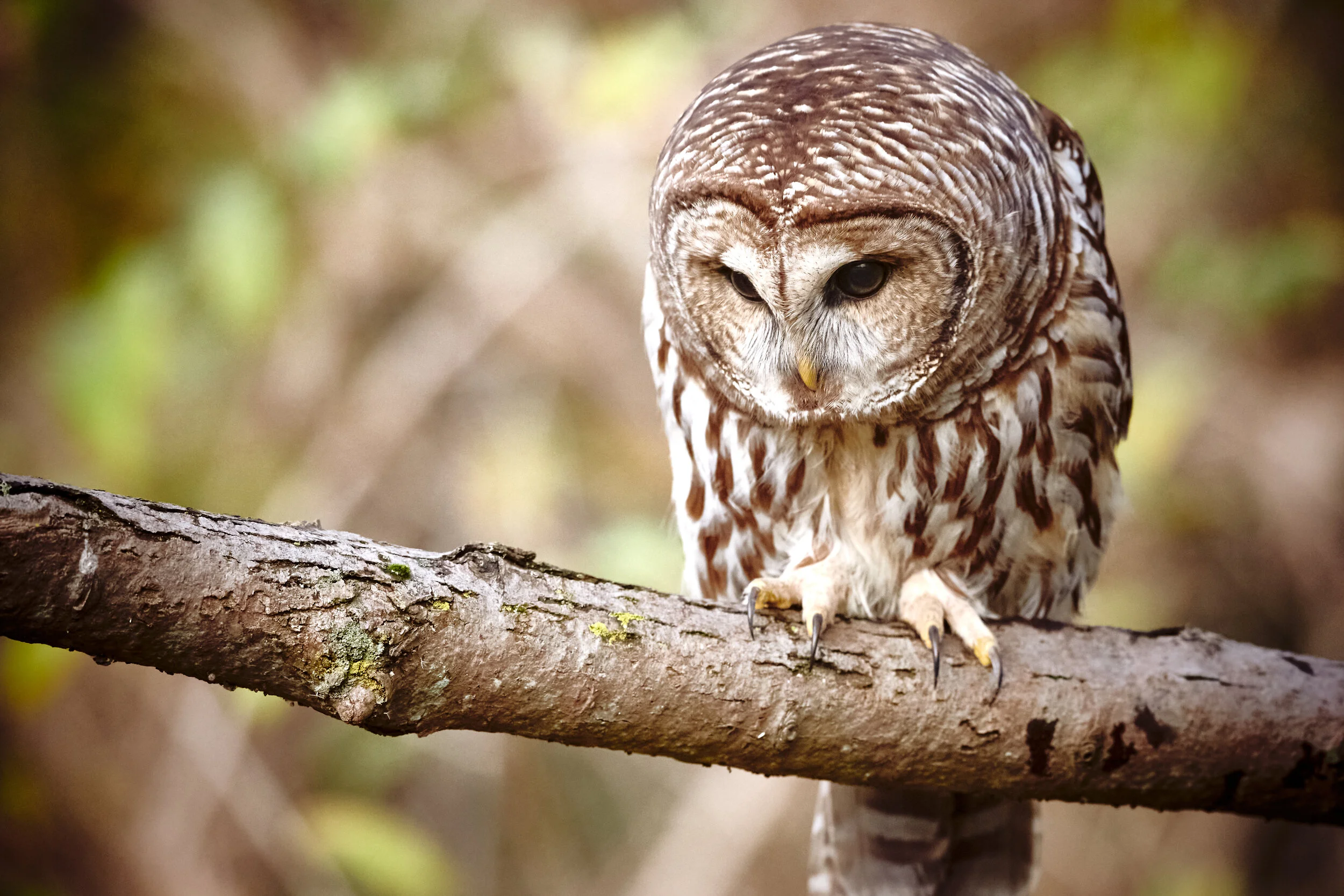
Barred Owl
Barred Owl (*Strix varia*)
Known for its soulful, dark brown eyes and brown-and-white striping, the Barred Owl favors old-growth, moist woodlands and river valleys in Ontario. This medium-sized owl is famous for its iconic "who-cooks-for-you, who-cooks-for-you-all" vocalization, which frequently echoes across swamps. Though mostly nocturnal, it occasionally hunts during overcast days. It sits motionless on low limbs, waiting to drop down on small mammals, frogs, and crayfish in dense vegetation.
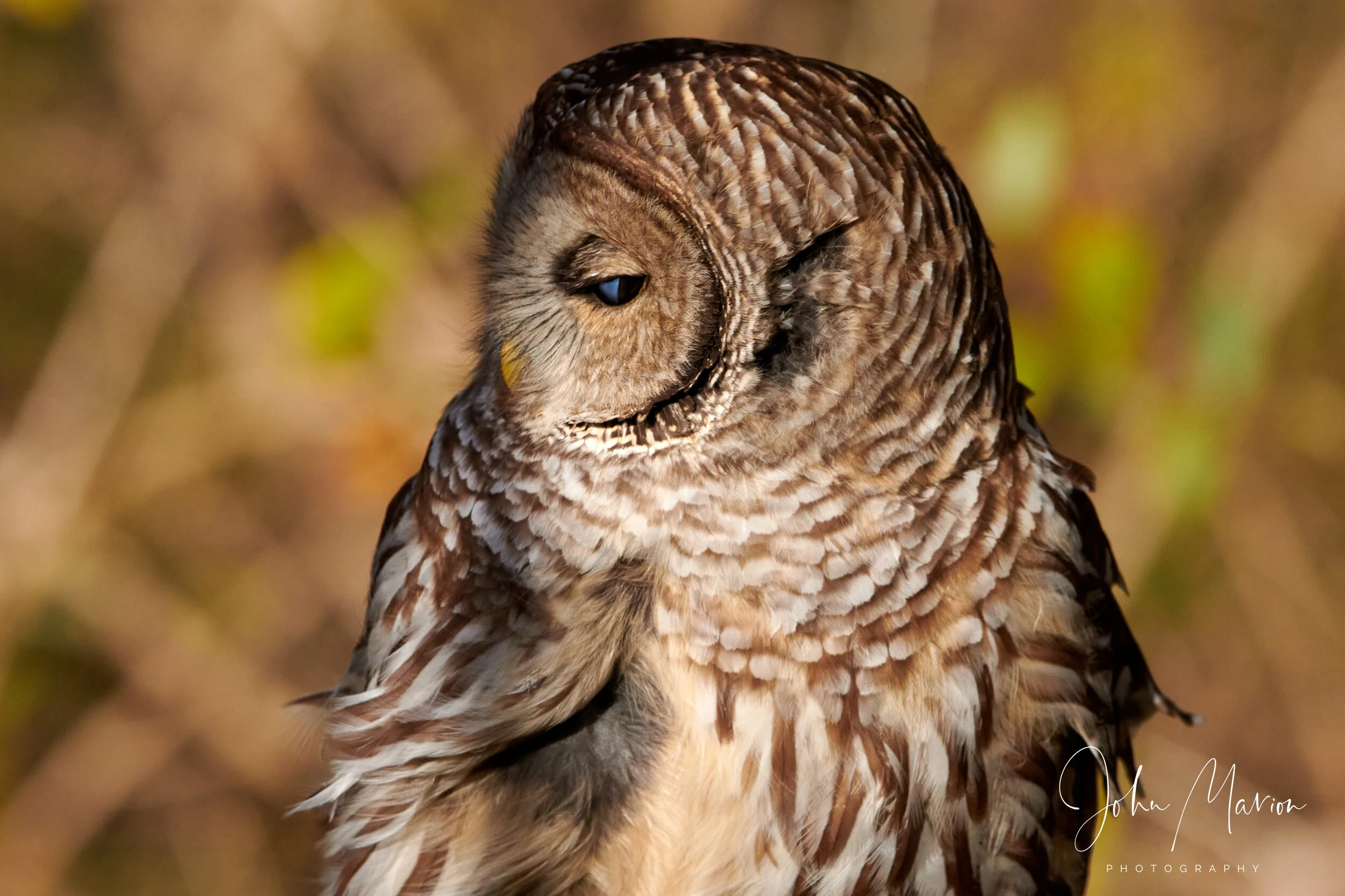
Barred Owl
Barred Owl (Strix varia)
Known for its soulful, dark brown eyes and brown-and-white striping, the Barred Owl favors old-growth, moist woodlands and river valleys in Ontario. This medium-sized owl is famous for its iconic "who-cooks-for-you, who-cooks-for-you-all" vocalization, which frequently echoes across swamps. Though mostly nocturnal, it occasionally hunts during overcast days. It sits motionless on low limbs, waiting to drop down on small mammals, frogs, and crayfish in dense vegetation.
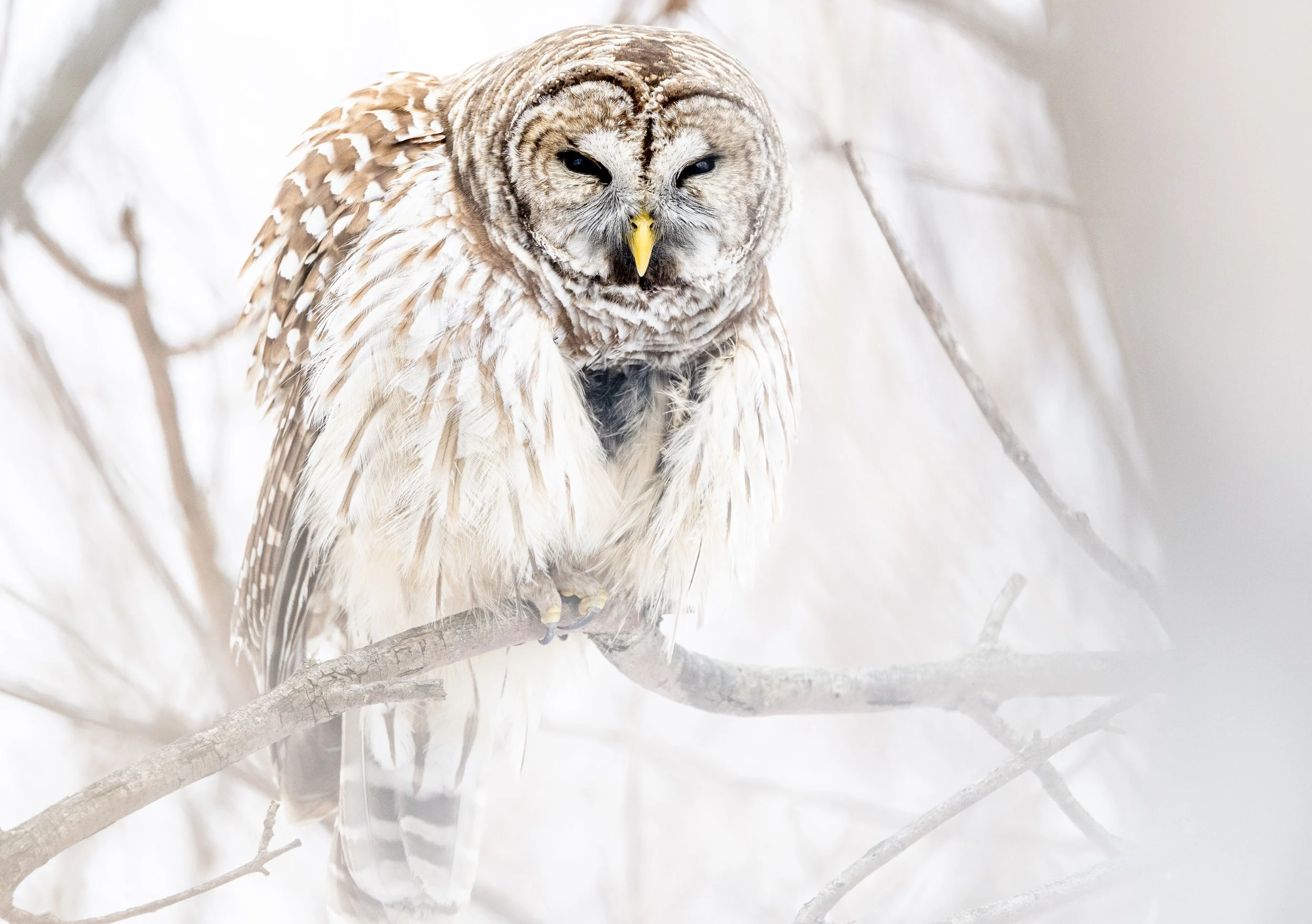
Barred Owl
Barred Owl (*Strix varia*)
Known for its soulful, dark brown eyes and brown-and-white striping, the Barred Owl favors old-growth, moist woodlands and river valleys in Ontario. This medium-sized owl is famous for its iconic "who-cooks-for-you, who-cooks-for-you-all" vocalization, which frequently echoes across swamps. Though mostly nocturnal, it occasionally hunts during overcast days. It sits motionless on low limbs, waiting to drop down on small mammals, frogs, and crayfish in dense vegetation.
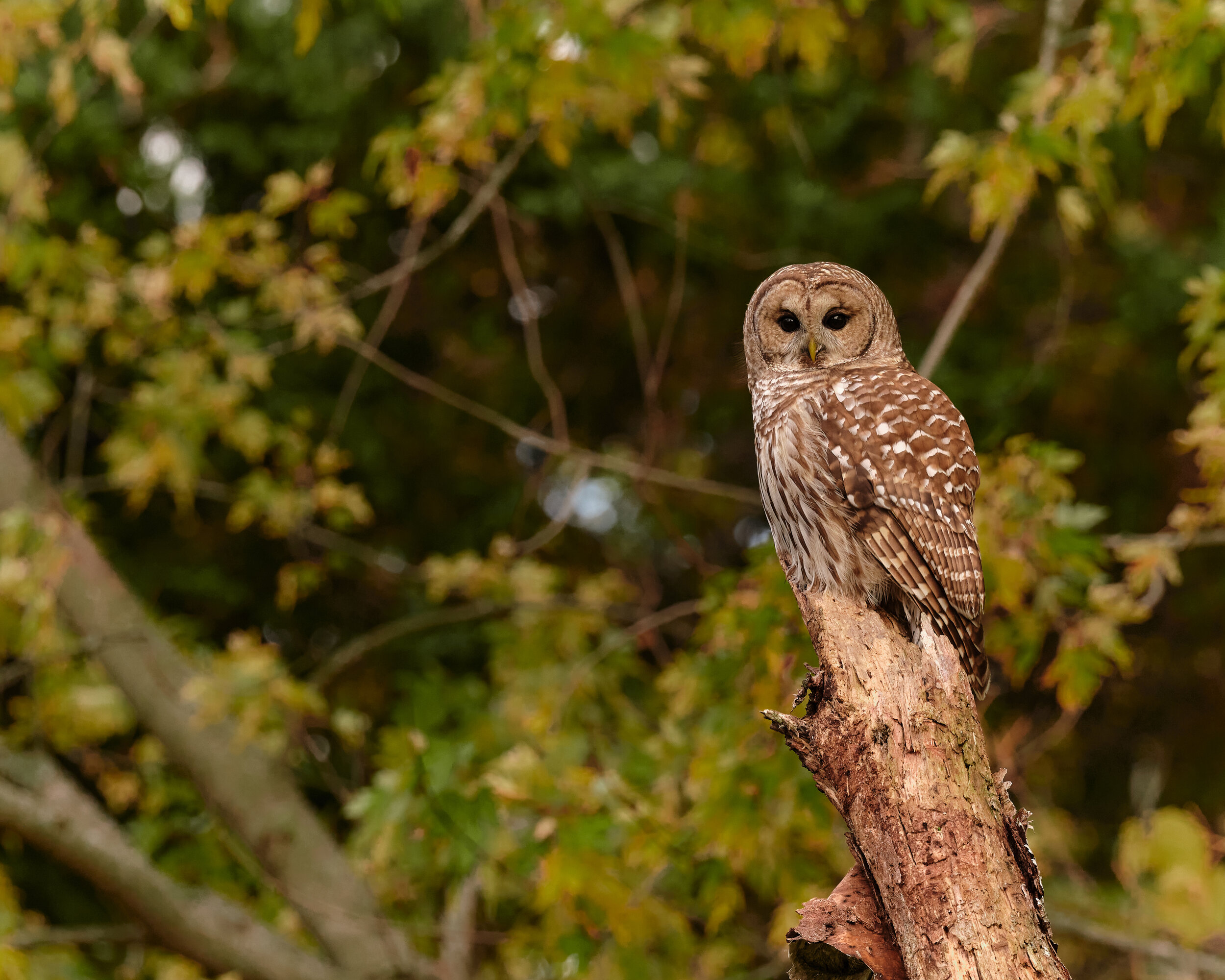
Barred Owl
Barred Owl (*Strix varia*)
Known for its soulful, dark brown eyes and brown-and-white striping, the Barred Owl favors old-growth, moist woodlands and river valleys in Ontario. This medium-sized owl is famous for its iconic "who-cooks-for-you, who-cooks-for-you-all" vocalization, which frequently echoes across swamps. Though mostly nocturnal, it occasionally hunts during overcast days. It sits motionless on low limbs, waiting to drop down on small mammals, frogs, and crayfish in dense vegetation.


Handsome Male Wood Duck in Grenadier Pond
Wood Duck (*Aix sponsa*)
Often considered North America’s most striking native duck, the male Wood Duck features iridescent green-and-purple crests, bold white facial stripes, and patterned flanks. Thriving in flooded forests, swamps, and quiet ponds across Ontario, it is uniquely adapted to perch on branches using sharp claws. Unlike most ducks, it nests high up in hollow tree cavities. It glides silently through wooded waters, feeding on acorns, seeds, and aquatic insects.

Male Wood Duck
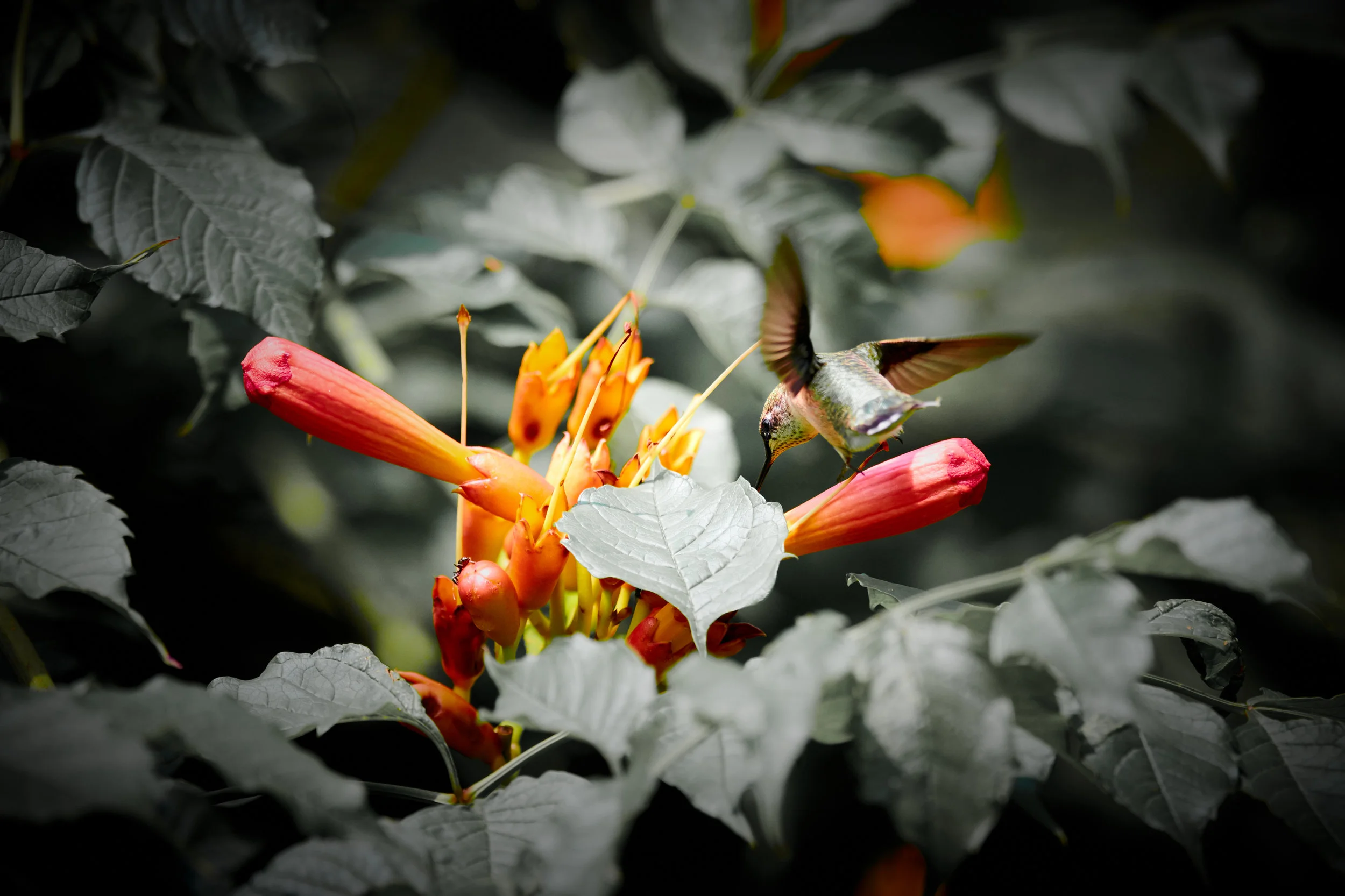
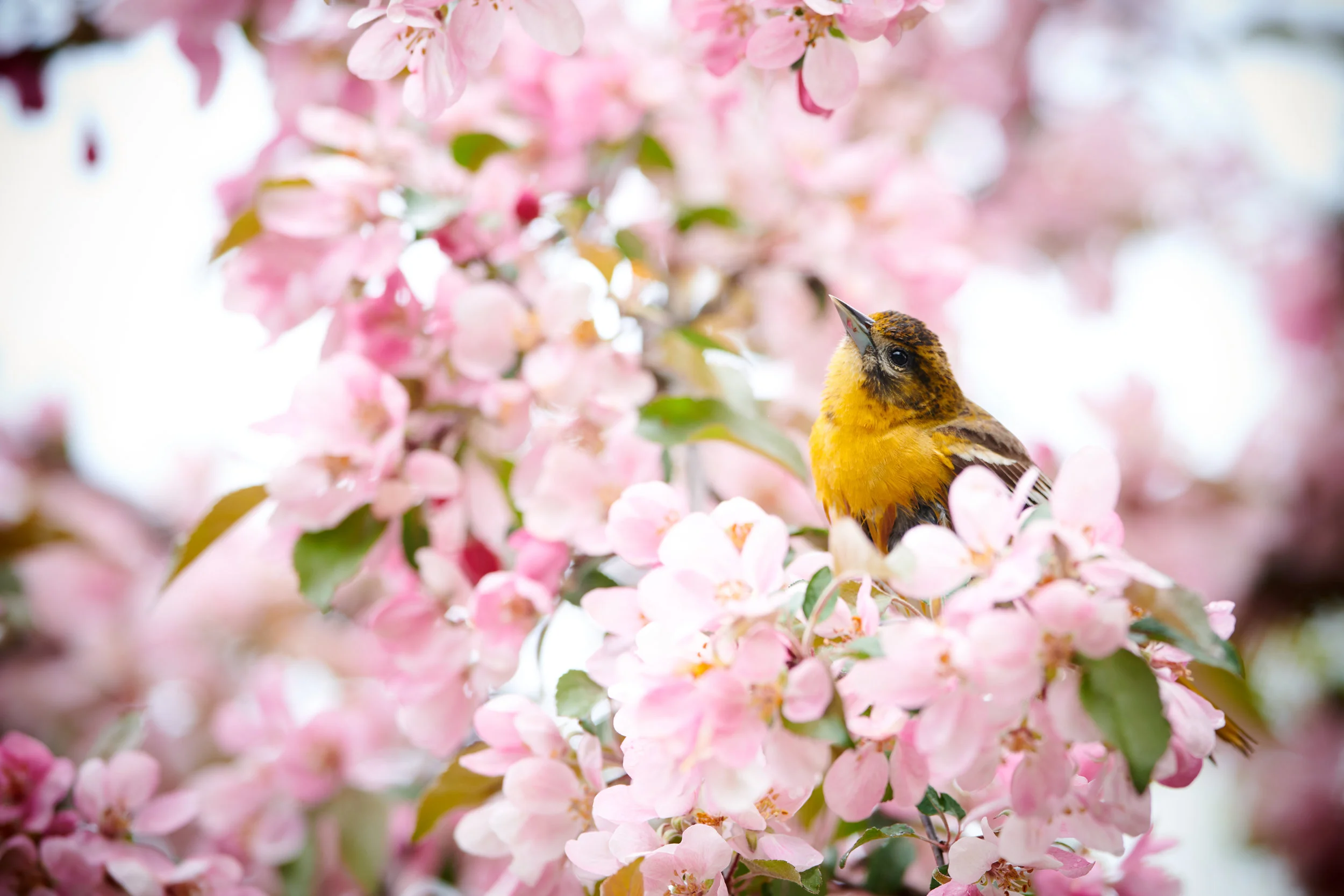
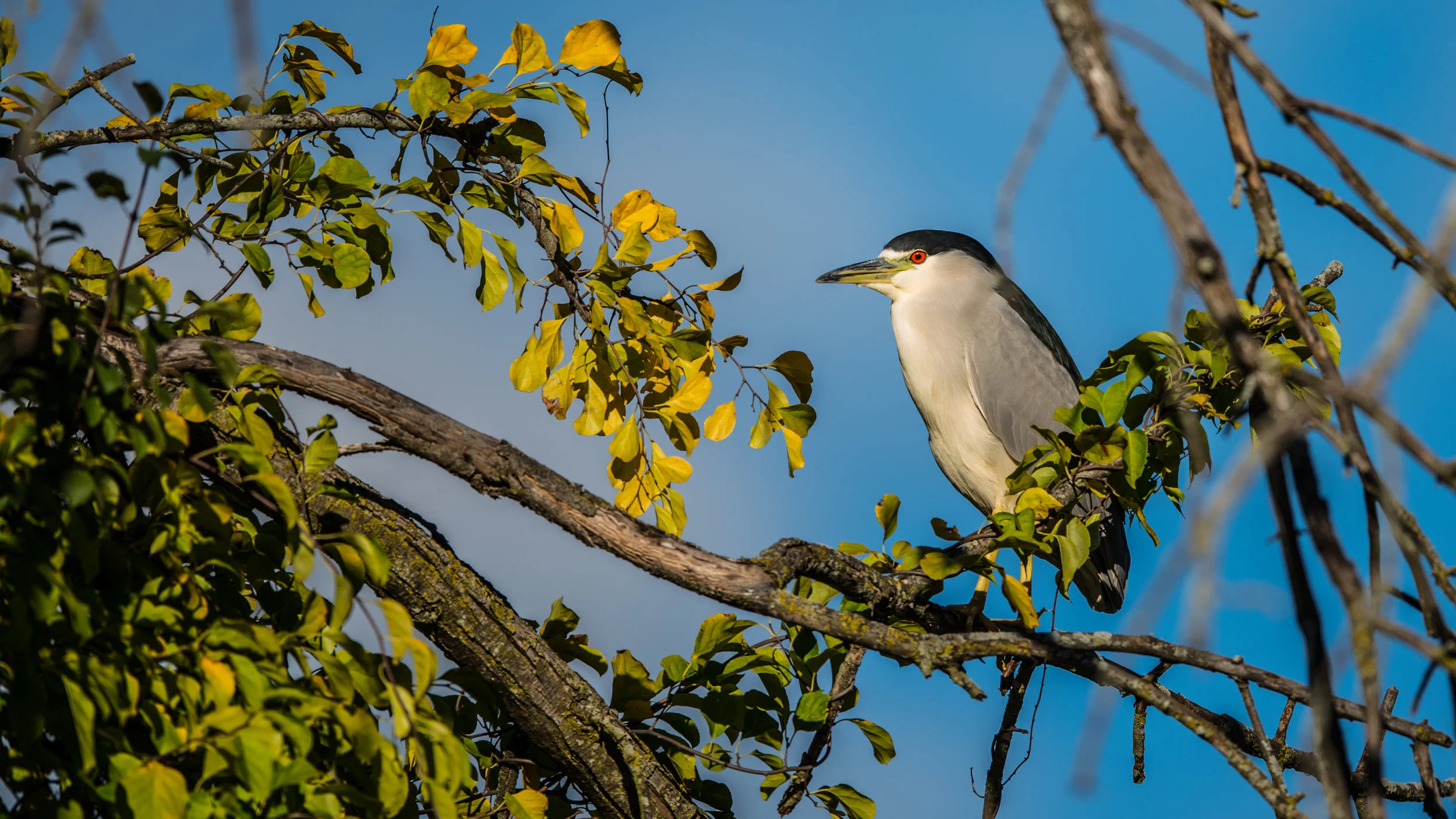
Black-crowned Night-Heron
. Black-crowned Night-Heron (*Nycticorax nycticorax*)
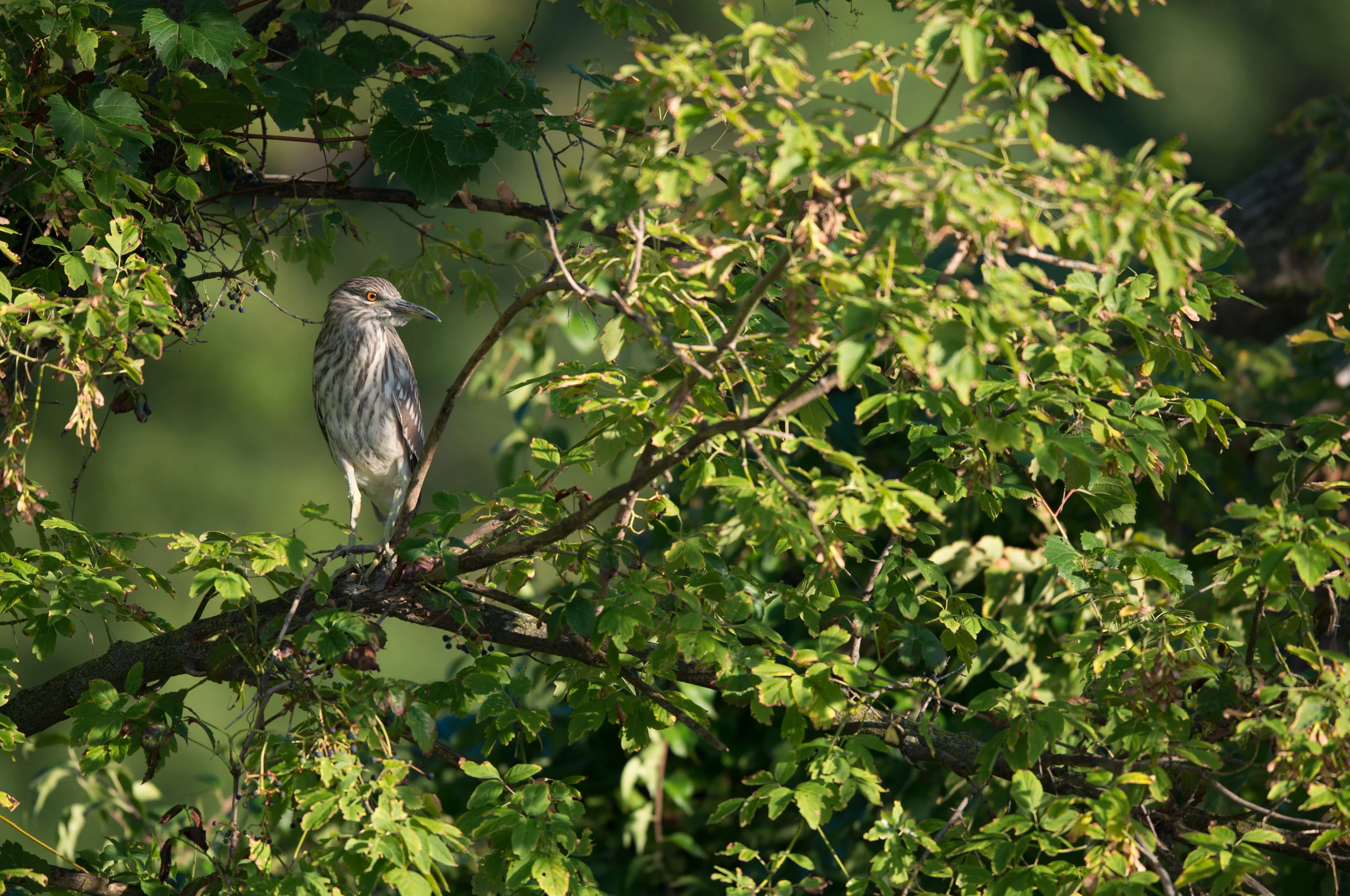
Stocky and short-necked compared to other herons, the Black-crowned Night-Heron features a jet-black cap and back, pale gray wings, and striking red eyes. Inhabiting Ontario's coastal wetlands, marshes, and island colonies, this secretive bird spends daytime hours hunched motionless in tree roosts. As dusk falls, it comes alive, hunting fish, frogs, and crustaceans along shallow water edges using a quick, powerful thrust of its heavy bill.
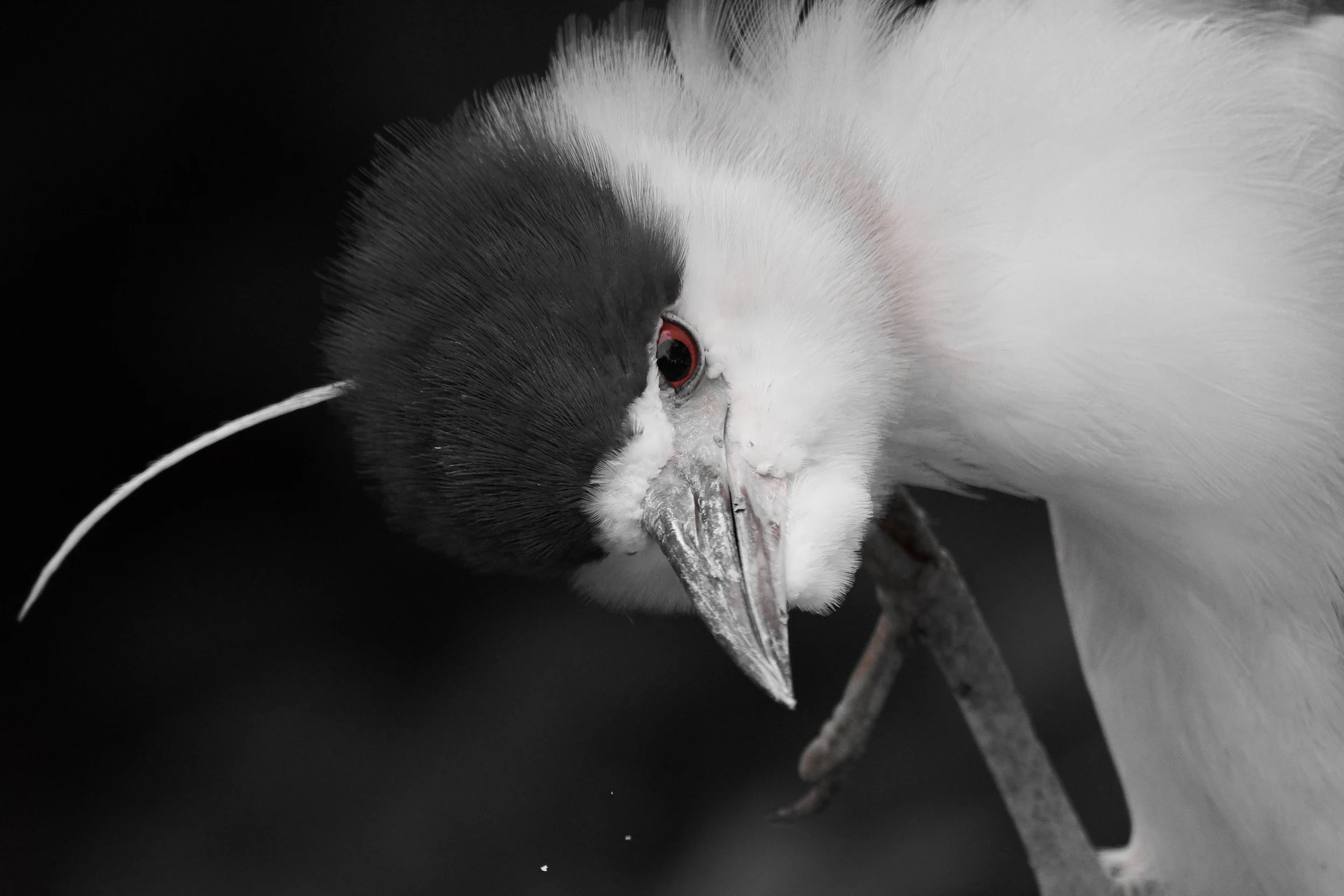
Black-crowned Night-Heron
Black-crowned Night-Heron (*Nycticorax nycticorax*)
Stocky and short-necked compared to other herons, the Black-crowned Night-Heron features a jet-black cap and back, pale gray wings, and striking red eyes. Inhabiting Ontario's coastal wetlands, marshes, and island colonies, this secretive bird spends daytime hours hunched motionless in tree roosts. As dusk falls, it comes alive, hunting fish, frogs, and crustaceans along shallow water edges using a quick, powerful thrust of its heavy bill.
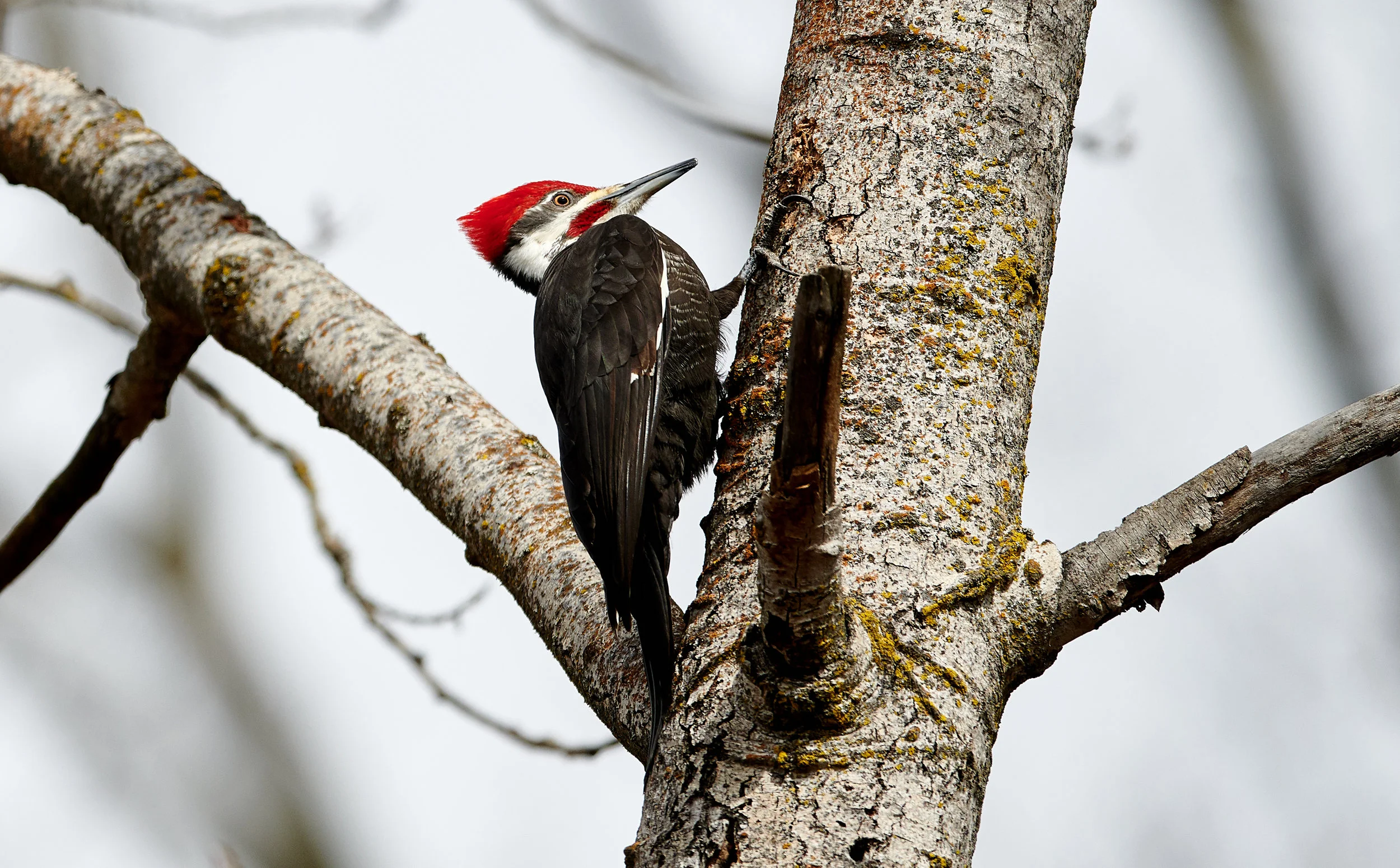
Striking Pileated Woodpecker at Lambton Woods
Pileated Woodpecker (*Dryocopus pileatus*)
The Pileated Woodpecker is Ontario’s largest woodpecker, roughly the size of a crow. Strikingly patterned with a bold red crest, black body, and white neck stripes, it frequents mature hardwood and mixed forests. Its powerful bill chips out large, rectangular excavation holes in rotting trees to hunt for carpenter ants, often leaving deep wood-chip mounds below. Its deep, rhythmic drumming and laughing call echo across woodland canopies.
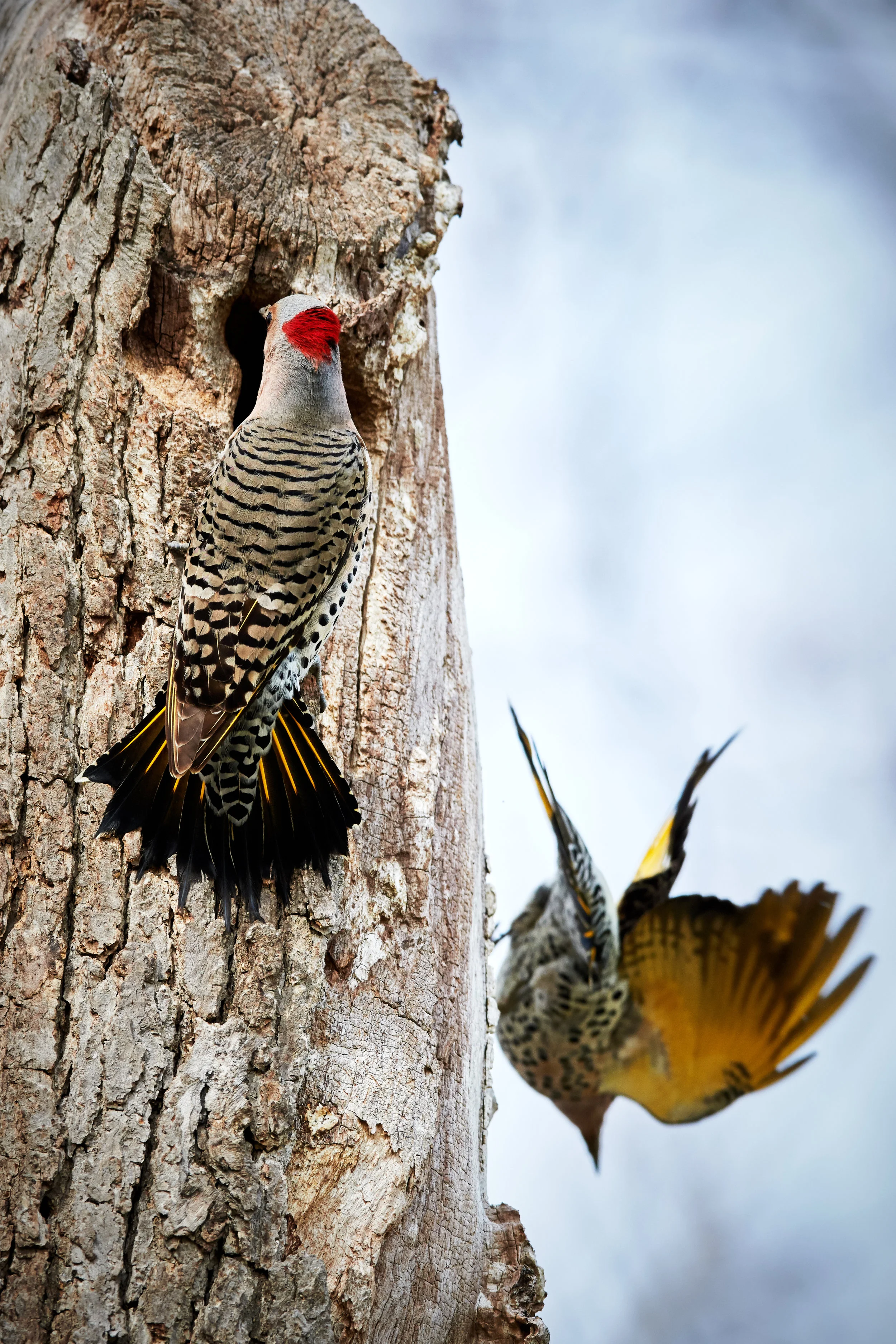
Frolicking Northern Flickers at Lambton
Northern Flicker (*Colaptes auratus*)
Unlike most tree-climbing woodpeckers, the Northern Flicker spends much of its time foraging directly on the ground. This handsome, brownish woodpecker features a black chest crescent, spotted belly, and brilliant yellow wing-shafts (in eastern populations) visible during flight. Inhabiting open woodlands, parks, and yards across Ontario, it uses its slightly curved bill and sticky tongue to dig into dirt mounds, feeding heavily on ants and beetles.
## Mammals

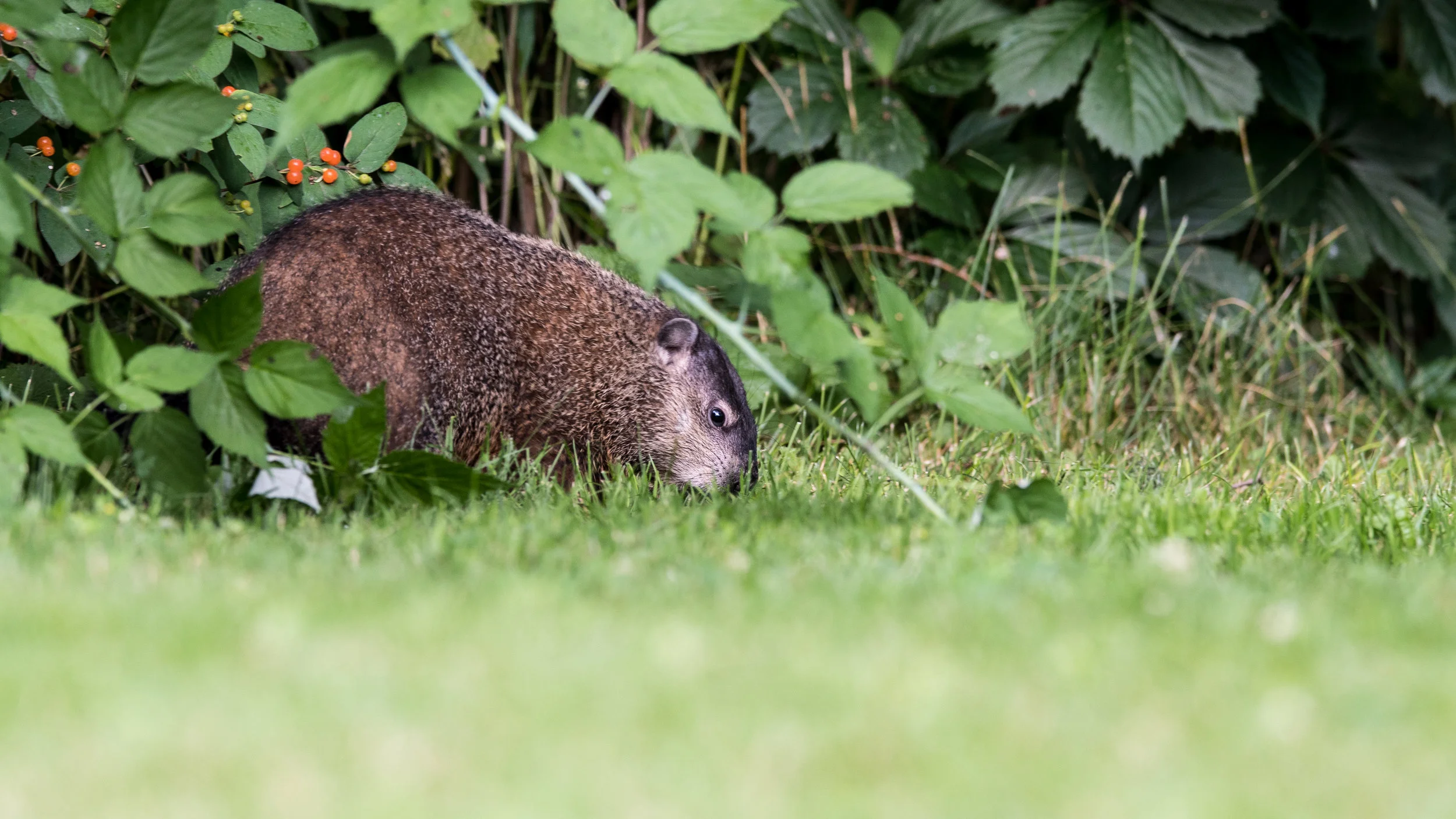
Found a Groundhog today:)
Groundhog (*Marmota monax*)
Also known as the woodchuck, the Groundhog is a stocky, heavy-bodied burrowing rodent common to Ontario’s pastures, forest edges, and road shoulders. Covered in grizzled coarse brown fur, it uses strong claws to dig extensive underground tunnel systems with multiple entrance holes. A strict herbivore eating grasses, clover, and garden plants, the groundhog gorges during summer to build fat reserves, entering deep winter hibernation from October to March.
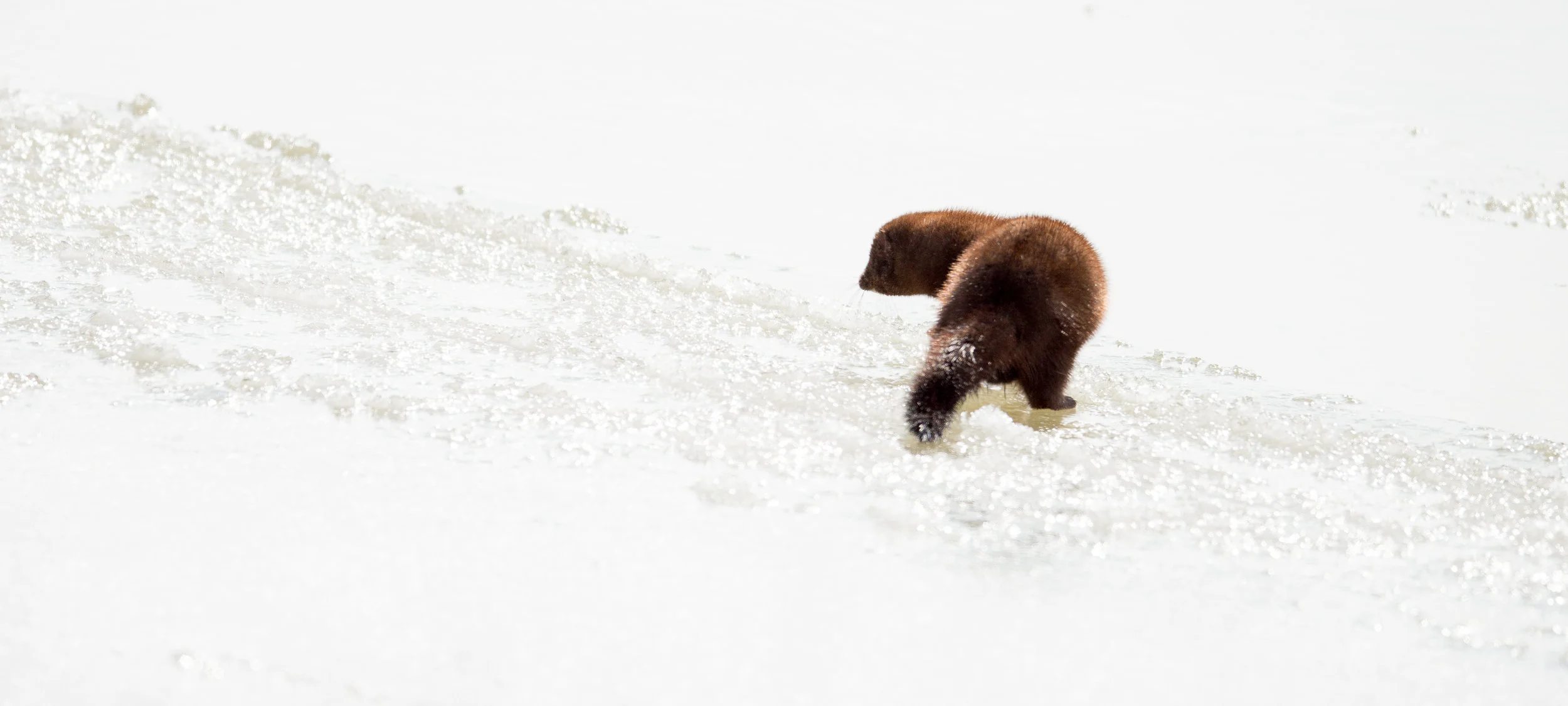
Mink
American Mink (*Neogale vison*)
The American Mink is a sleek, semi-aquatic carnivore belonging to the weasel family, abundant along Ontario's rivers, streams, and lake shores. Sporting a dark chocolate-brown coat, a white patch on its chin, and partially webbed feet, it is a formidable swimmer. Active mainly at night and during dusk or dawn, this ferocious predator hunts muskrats, frogs, fish, and waterfowl, playing an essential role in keeping shoreline ecosystems balanced.

American Mink
merican Mink (*Neogale vison*)
The American Mink is a sleek, semi-aquatic carnivore belonging to the weasel family, abundant along Ontario's rivers, streams, and lake shores. Sporting a dark chocolate-brown coat, a white patch on its chin, and partially webbed feet, it is a formidable swimmer. Active mainly at night and during dusk or dawn, this ferocious predator hunts muskrats, frogs, fish, and waterfowl, playing an essential role in keeping shoreline ecosystems balanced.
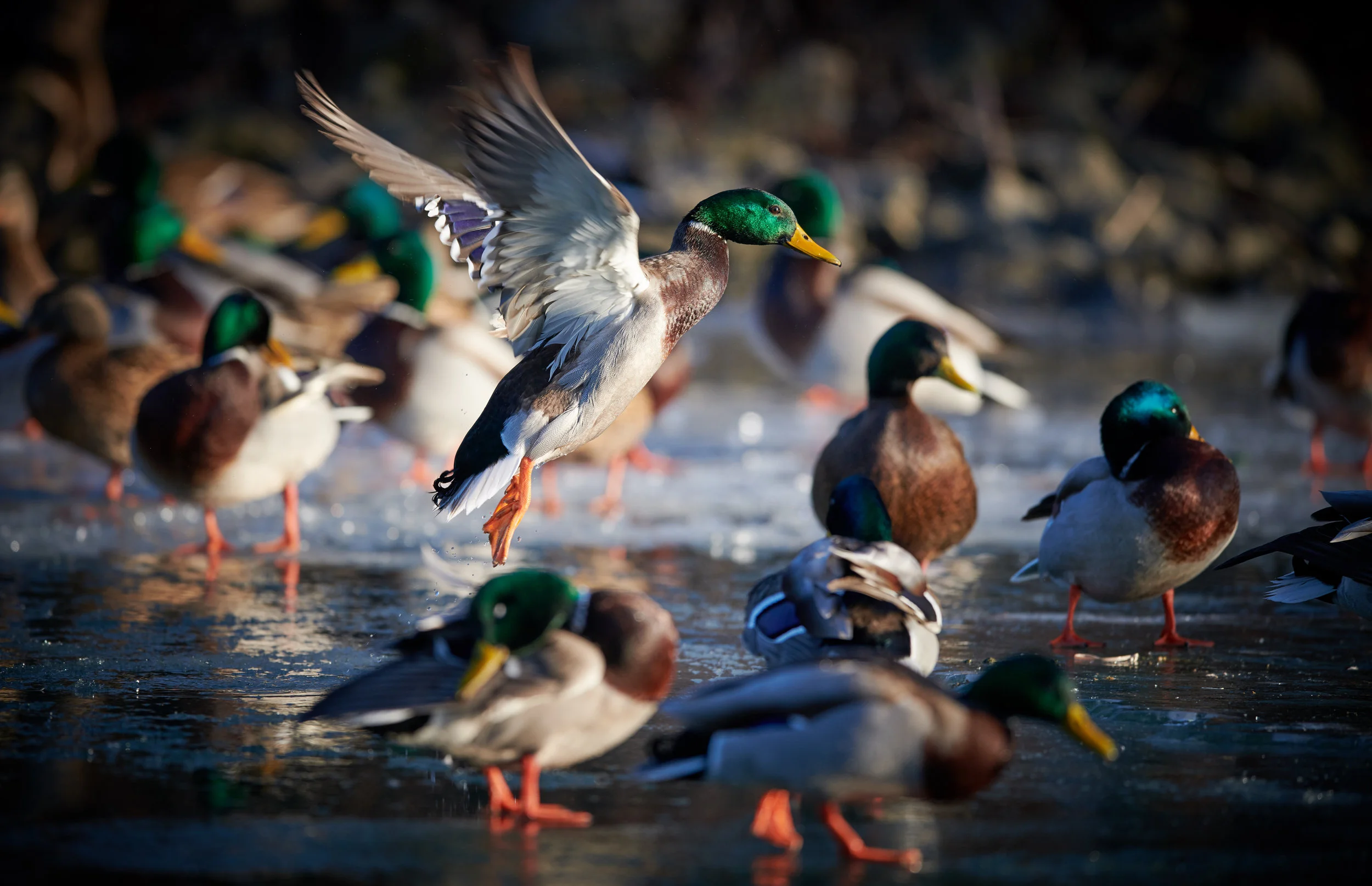
Mallard Duck
Mallard (*Anas platyrhynchos*)
The Mallard is Ontario's most ubiquitous dabbling duck, inhabiting everything from remote northern wetlands to urban park ponds. Males are easily recognized by their glossy emerald-green heads, yellow bills, and bright blue wing patches (speculum). Highly adaptable and vocal, Mallards feed by tipping tail-up in shallow water to reach submerged plants. As ancestors to almost all domestic duck breeds, they remain an iconic and friendly fixture of Canadian waterways.
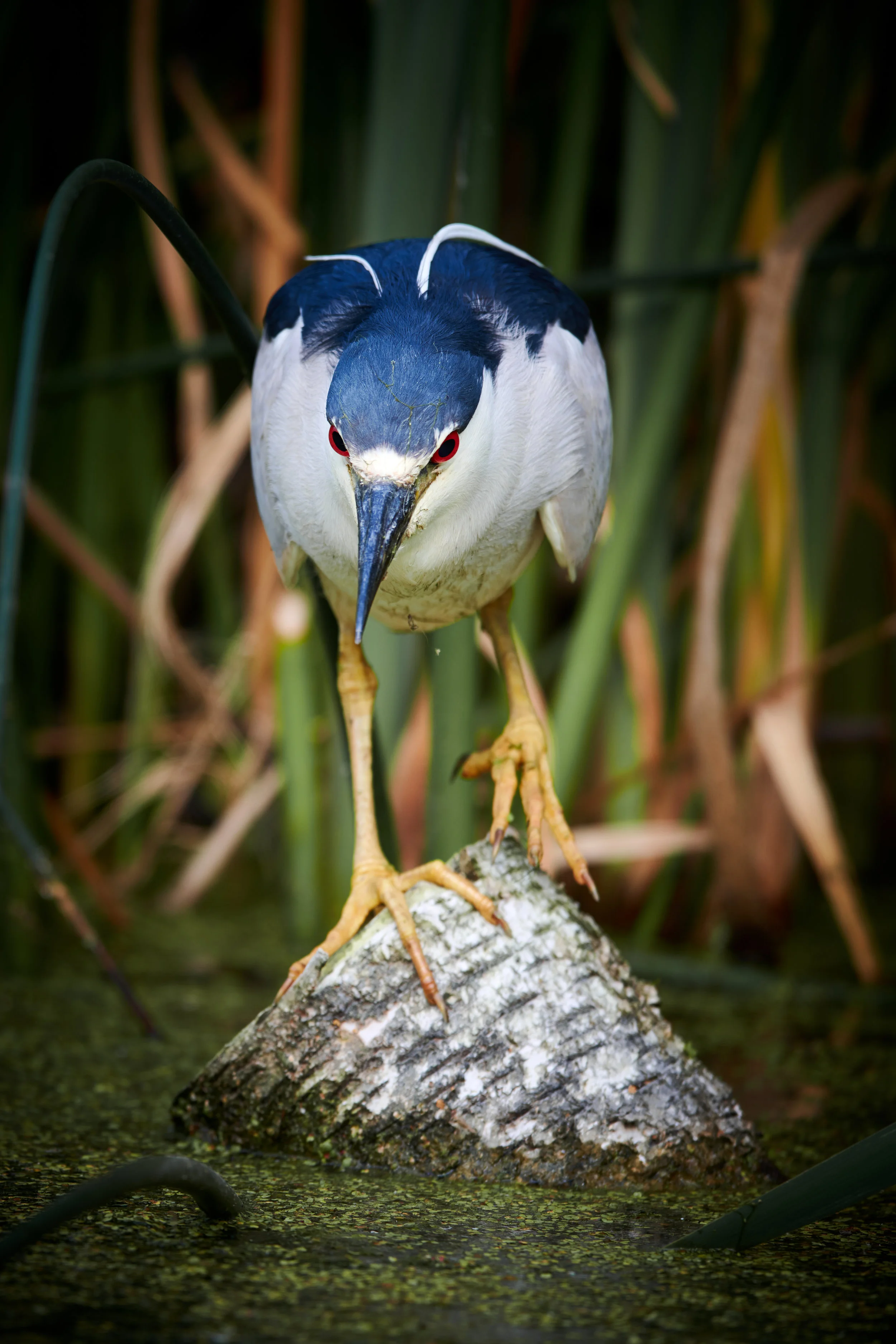
Black Crowned Night Heron at Smythe Park

American Kestrel
American Kestrel (*Falco sparverius*)
The American Kestrel is North America’s smallest falcon, about the size of a blue jay. Boasting colorful slate-blue and rusty-cinnamon plumage with vertical black face stripes, it prefers open farm fields, meadows, and roadside corridors throughout Ontario. Known for its ability to hover in place against headwinds like a tiny helicopter, this nimble hunter scans grass below for grasshoppers, voles, and mice before executing a swift, steep dive.

Male American Kestrel
The smallest of the Falcons
American Kestrel (*Falco sparverius*)
The American Kestrel is North America’s smallest falcon, about the size of a blue jay. Boasting colorful slate-blue and rusty-cinnamon plumage with vertical black face stripes, it prefers open farm fields, meadows, and roadside corridors throughout Ontario. Known for its ability to hover in place against headwinds like a tiny helicopter, this nimble hunter scans grass below for grasshoppers, voles, and mice before executing a swift, steep dive.

Trumpeter Swans by the lake
Trumpeter Swan (*Cygnus buccinator*)
As North America's largest native waterfowl, the Trumpeter Swan is a triumphant conservation story in Ontario, having recovered from near-extinction. Featuring snow-white plumage, a massive wingspan, and an all-black bill, it frequents shallow lakes, rivers, and marshes. It derives its name from its resonant, horn-like vocalizations that carry across open water. Family groups feed on submerged aquatic plants, wintering on ice-free waters along the lower Great Lakes.

Long Eared Owl
Long-eared Owl (Asio otus)
The Long-eared Owl is a slender, medium-sized species known for its long, closely set ear tufts and orange facial disc. Breeding in dense coniferous groves adjacent to open fields in central and southern Ontario, it is exceptionally secretive. By day, it compresses its body vertically against tree trunks to blend into the bark. At night, it hunts low over open meadows, using its acute hearing to pinpoint mice and voles.
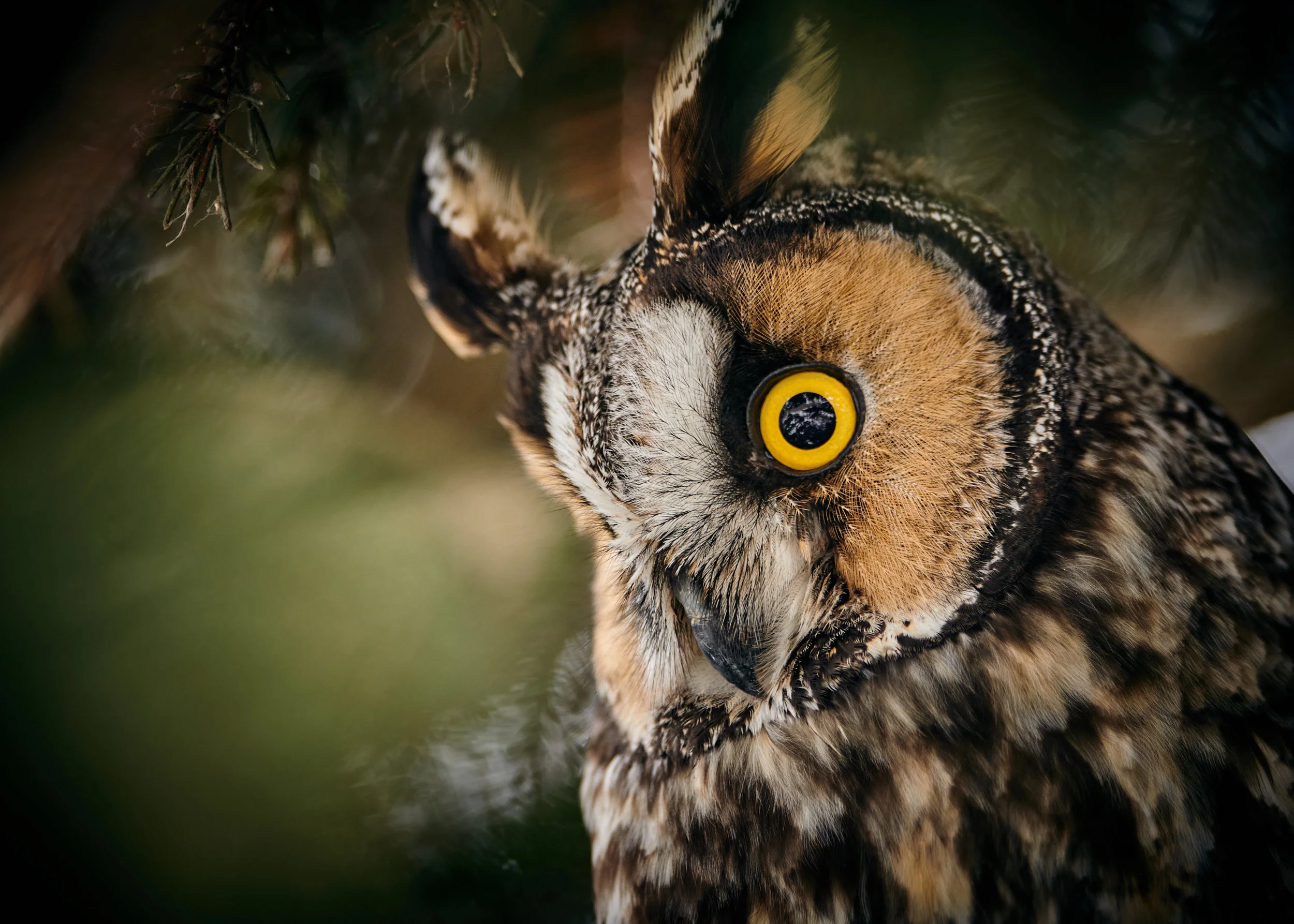
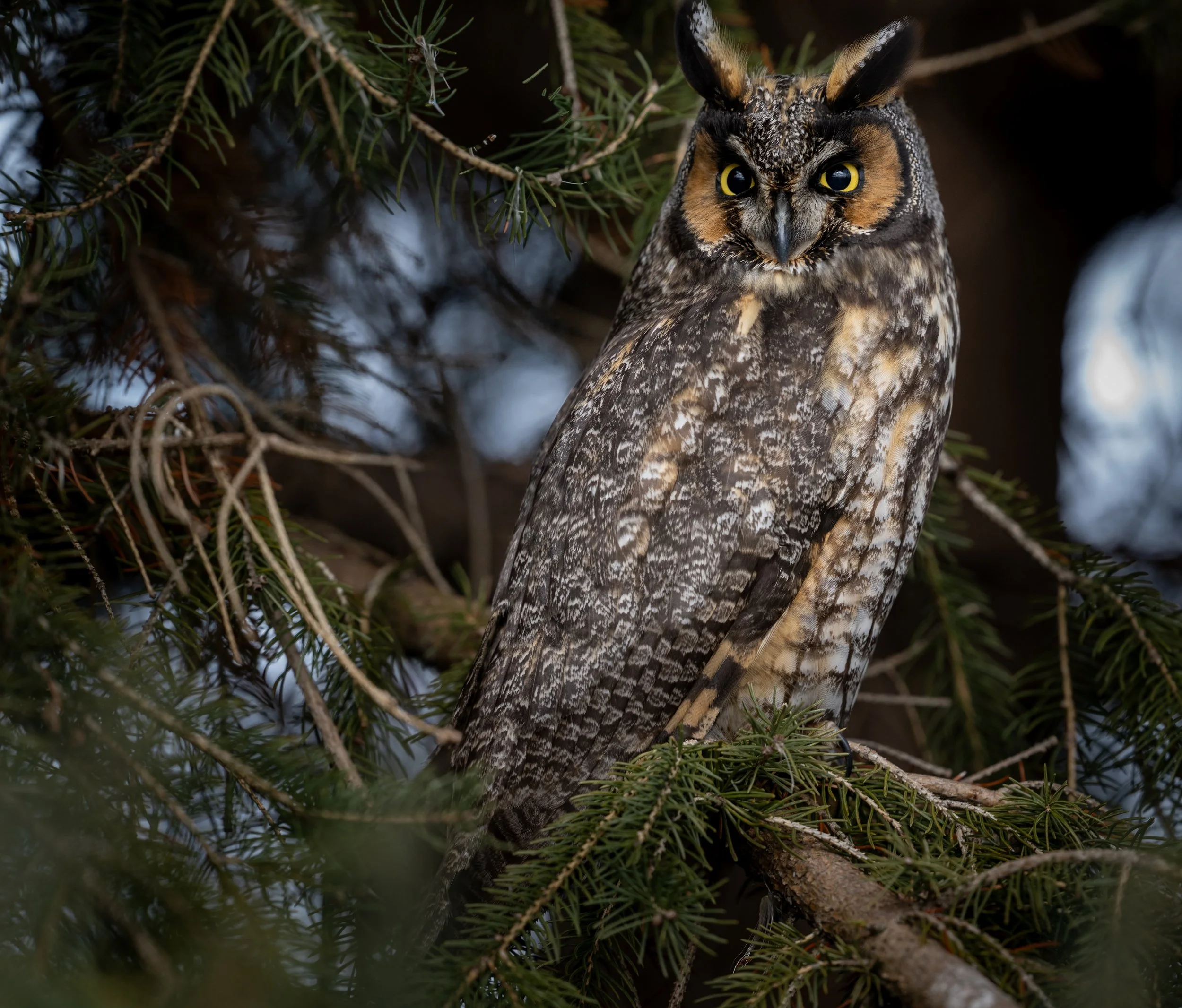


Lucky day, Two napping Long Eared Owls ONE tree!

Gorgeous Red-necked Grebe at Humber Bay park
Red-necked Grebe (*Podiceps grisegena*)
A medium-sized waterbird of Ontario’s large inland lakes and Great Lakes bays, the Red-necked Grebe is distinguished in breeding season by its rusty-red neck, crisp black cap, and pale gray cheeks. Equipped with feet set far back on its body, it is an extraordinary diver, pursuing fish and aquatic invertebrates deep underwater. During nesting, it constructs floating platforms of decaying vegetation anchored to reed beds along quiet shorelines.

Tree Swallows
Ontario hosts several swallow species—including Barn, Tree, and Cliff Swallows—celebrated for their extraordinary aerial agility. Possessing streamlined bodies and long, pointed wings, they spend nearly all their active hours airborne. Flying in swooping, darting patterns over fields and open water, they catch flying insects right out of the sky. Many species build mud-brick nests attached to barn eaves, bridges, or tree cavities near insect-rich habitats.


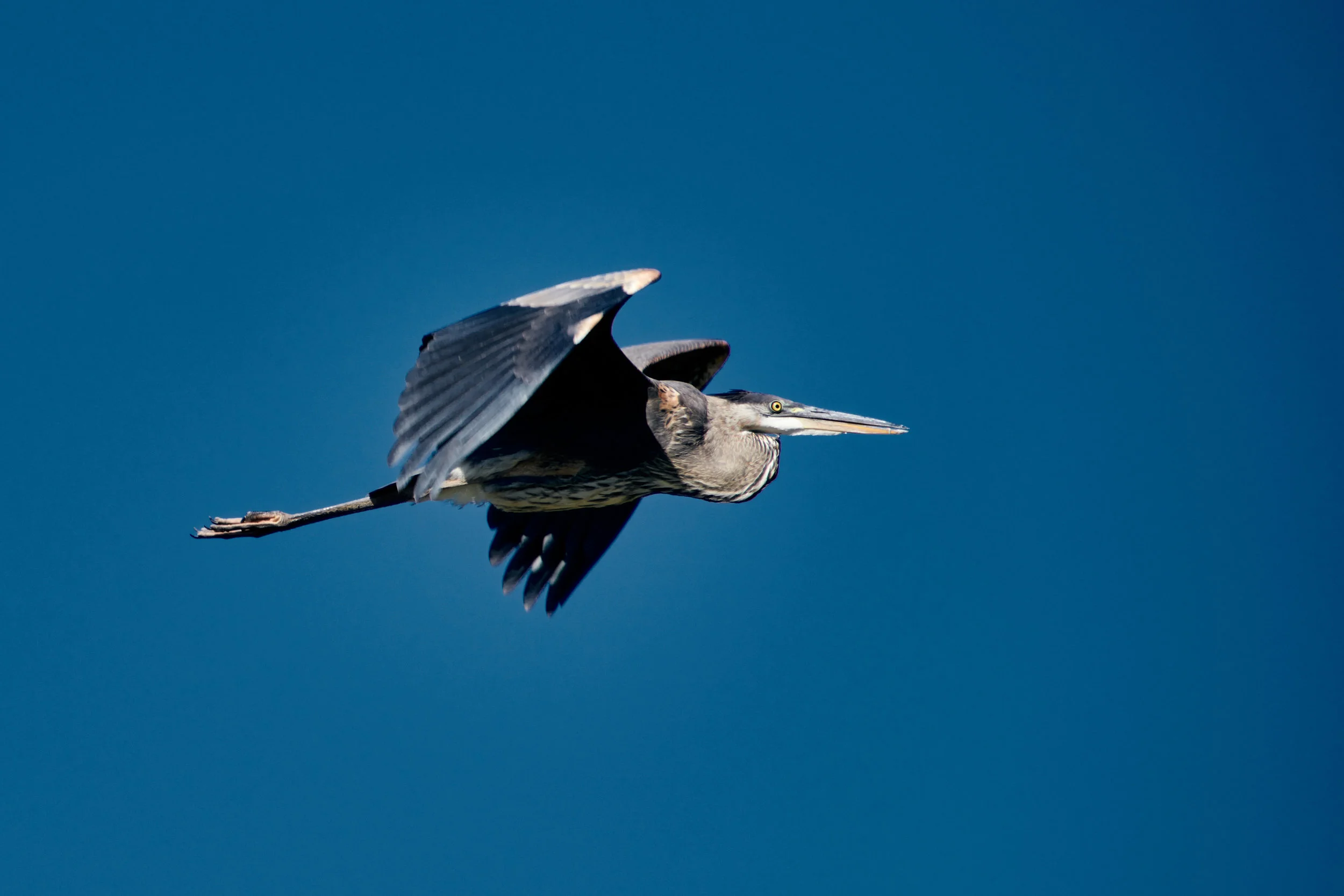
Great Blue Heron
Great Blue Heron (*Ardea herodias*)
Standing over three feet tall, the Great Blue Heron is Ontario’s largest heron species, common along lake shores, riverbanks, and marshes. With its slate-blue plumage, dagger-like bill, and long black head plumes, it moves with slow, deliberate grace. It hunts by standing completely still in shallow water before striking with lightning speed to spear fish, frogs, and small mammals, flying with its long neck folded into a tight S-shape.
## Raptors, Shorebirds & Aerialists

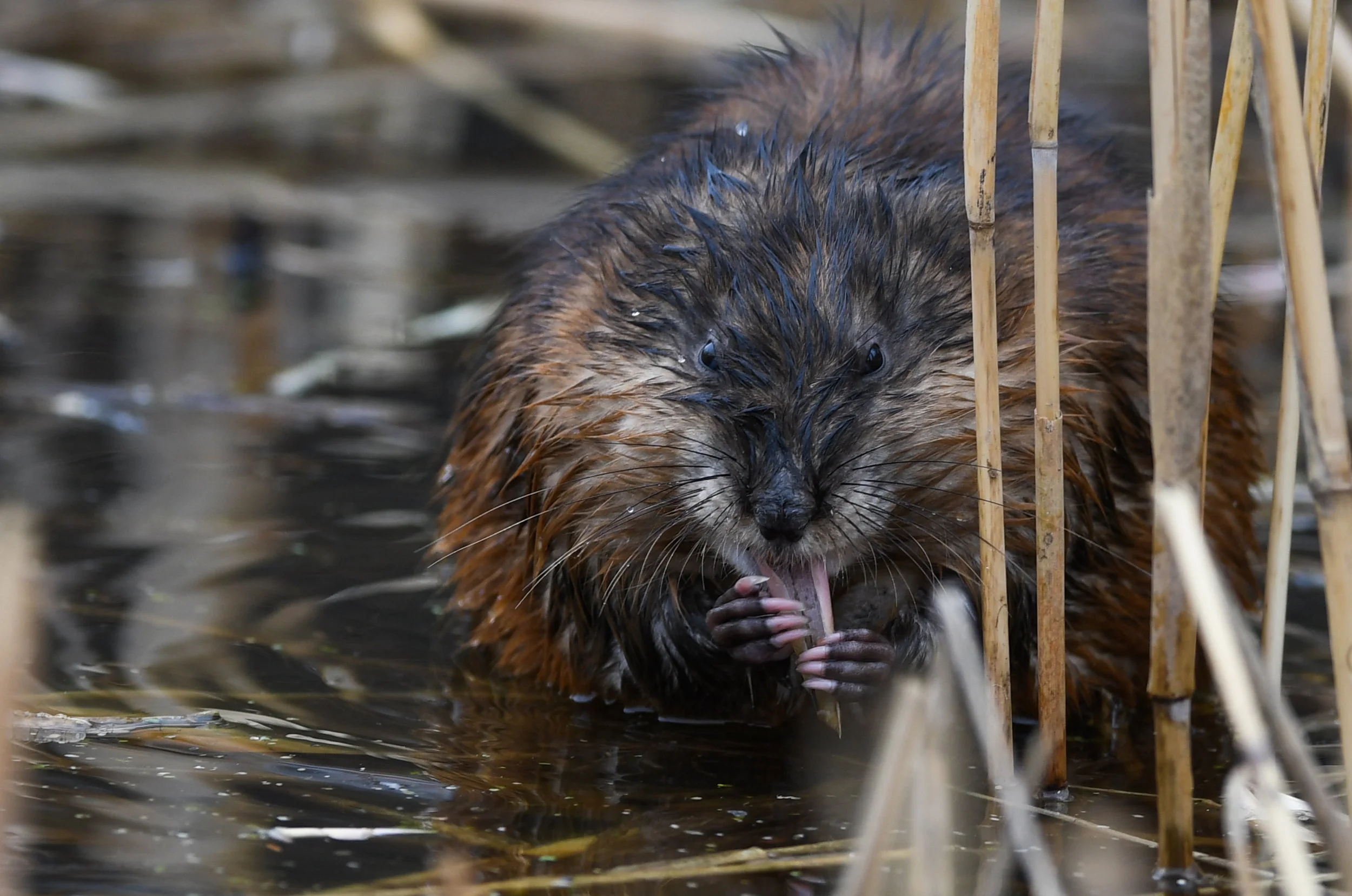
Muskrat
Muskrat (*Ondatra zibethicus*)
The Muskrat is a medium-sized, semi-aquatic rodent inhabiting Ontario’s marshes, ponds, and slow-moving streams. Sporting waterproof dark brown fur and a vertically flattened, scaly tail that acts as a rudder, it is a master swimmer. Muskrats construct dome-shaped lodges out of cattails and mud or dig bank burrows. Primarily herbivorous, they feed heavily on aquatic vegetation, playing a critical role in shaping healthy wetland open-water spaces.
Amazing Beasts among us